
The short answer
Edmonton to Jasper by RV is a straightforward way to reach the Canadian Rockies from northern Alberta. The main journey follows Highway 16 west through the Yellowhead corridor, with useful service towns before you enter Jasper National Park. The one-way distance is roughly 365–370 km, and an RV should allow around four to five hours of driving before sightseeing, traffic or longer breaks.
Three days gives you a mountain weekend, but five days is a much better first trip. Use the first day for travel and setup, spend several days exploring from one campground, and keep the final day for an unhurried return. You do not have to drive the Icefields Parkway to make this trip worthwhile: the eastern approach, Jasper town and nearby lakes provide plenty to enjoy.
The practical route is Edmonton → Highway 16 → Edson → Hinton → Jasper National Park east entrance → Jasper. Fuel, groceries, campsite reservations and current recovery information are the main planning tasks. Jasper’s 2024 wildfire changed campground and attraction availability, so old lists need checking against current Parks Canada information.
Trip at a glance
| Planning item | What to expect |
|---|---|
| One-way distance | Approximately 365–370 km to Jasper town; campground mileage varies |
| Driving time | About 4–5 hours without lengthy stops |
| Recommended trip | 3–5 days; longer for a Parkway extension |
| Main road | Highway 16, the Yellowhead Highway |
| Best general season | June–September for a first summer RV visit |
| Supply checkpoints | Edson, Hinton and Jasper |
| Main concerns | Campground availability, wildfire recovery, wildlife and side-road limits |
| Ferries | None on the main route |
Distances are estimates from Edmonton to the Jasper area. Plot the specific campground entrance before departure, particularly if you are staying east of town or at a location with a different access road.
Day 1: Edmonton to Hinton
Leave with a loaded RV that you know how to operate. Check tire pressures, lights, hitch connections and tank levels, then choose a comfortable departure time. An early start helps, but avoiding fatigue matters more than reaching a particular roadside stop before breakfast.
Highway 16 carries you through farming country and forest before the mountains become the main view. Edson is a useful place for a rest and supply stop. Pick a station or shopping area with room for your vehicle rather than turning into the first entrance because it appears on the navigation screen.
Hinton is the final major service checkpoint before entering the park from the east. Refuel, buy groceries and deal with any equipment issue here. If you are arriving late or want a shorter travel day, a confirmed campground in the Hinton area can be a useful first overnight.
Check your Jasper campground arrival time before leaving Hinton. If the drive has taken longer than expected, shorten the sightseeing list instead of rushing through the park. Mountain scenery is more enjoyable when you are rested and can stop only where parking is suitable.
Hinton to Jasper: slow down for the eastern approach
Beyond Hinton, the landscape becomes the attraction. The road passes mountain walls, rivers and the broad Jasper Lake area before reaching town. Allow time for one or two appropriate stops, but keep the campground arrival practical.
Wildlife can appear beside the road or attract a sudden queue of vehicles. Leave room to stop and avoid following closely behind a vehicle that is scanning for animals. If you see wildlife, keep moving when there is no safe designated place to pull off. Blocking a highway lane is not an acceptable way to get a photograph.
Parks Canada identifies designated RV and trailer parking at Jasper Lake. That makes it a useful stop to research on this approach. Follow the actual signs and conditions when you arrive; a designated area can still be full or temporarily affected by maintenance.
Once in Jasper, use the campground’s directions. A map pin for the town centre does not tell you which loop to enter or whether the site requires backing. Arriving before dark makes both the final road and pad maneuver easier, especially in an unfamiliar rental motorhome.
Jasper campground planning after the wildfire
Parks Canada’s 2026 information, checked in mid-September 2026, looked like this. Treat it as a snapshot and confirm the 2027 schedule once it is published. Our directory lists all campgrounds in Jasper National Park.
| Campground | 2026 season | Site types | RV notes |
|---|---|---|---|
| Whistlers | May 6 to October 12, reservable | Full service, electrical, unserviced | Largest campground in the park; fits most motorhome and trailer sizes |
| Wapiti | May 13 to October 28, then electrical-only winter sites (first come, first served) | Electrical, unserviced | Reduced capacity after the 2024 wildfire; fits most sizes |
| Miette | May 13 to September 14, reservable | Unserviced | Best for tents and units under 8.2 m (27 ft) |
| Snaring | May 13 to September 28, first come, first served | Primitive | Best for tents and units under 8.2 m (27 ft) |
| Wabasso | Closed for 2026 | Not available | Closed until further notice |
| Whirlpool Group Campground | Closed for 2026 | Not available | Closed for the 2026 season |
Whistlers Campground
Whistlers is one of Jasper’s main frontcountry options. Parks Canada lists several site types, including full-service, electrical and unserviced camping. Check the reservation details and pad dimensions for your equipment rather than assuming the campground’s overall RV suitability guarantees your site.
It is a practical base for a stay near town. Choose it according to available services, site fit and your planned excursions. If cooling, mobility or easy setup matters to your group, prioritize those needs over a photograph of a particular site’s view.
Wapiti Campground
Wapiti is another major campground near Jasper. For summer 2026, Parks Canada reports reduced capacity following the wildfire. Electrical and unserviced categories require different water and tank-use plans, so inspect the individual booking carefully.
Recovery can also affect shade and the character of a site. Be prepared for a more open setting than an old photograph suggests. Bring suitable shade or rain shelter where allowed, secure it properly and follow current site instructions.
Miette Campground
Miette Campground is an option nearer the eastern part of the park. Parks Canada says it is best suited to tents and motorhomes or trailers under 8.2 metres, or 27 feet. That makes it a candidate for some smaller RVs rather than a default choice for a long fifth wheel.
The campground and the road continuing toward Miette Hot Springs have different considerations. A campsite booking does not establish that your rig may continue along the full scenic road. Check both the site’s dimensions and the road restrictions before deciding on a base.
Wabasso and recovery updates
For 2026, Parks Canada lists Wabasso and Whirlpool Group Campground as closed for the camping season. Do not use an older itinerary that relies on these locations without checking the current year’s information. A campground may appear on a map even when public camping is unavailable.
For a future trip, use this guide’s route structure and replace the seasonal details with the current official schedule. Recovery information is a dated planning snapshot, not a prediction of when every site or attraction will reopen.
Booking the right RV site
Write down the motorhome or trailer length and check how the reservation system asks you to report equipment. Tow vehicles, bike racks and rear storage can change the space you need. Use site photos and maps, and contact Parks Canada if the booking description leaves a material question unanswered.
Full service is convenient when you want water and sewer at the pad. Electrical service can be helpful without providing either of those hookups. Unserviced camping requires enough water, battery capacity and tank room for the stay. Choose based on your actual needs rather than treating the least expensive available site as automatically workable.
If your preferred campground is unavailable, consider a different date, a suitable alternative within the park or an outside base. Do not arrive expecting to sleep in an attraction parking lot. Long weekends and summer demand can make spontaneous camping particularly difficult. Our guide to RV camping in Alberta explains how reservations work across the province.
For a five-day trip, four nights at one base is usually efficient. It gives you time to explore without moving the RV between neighbouring campgrounds. Save the campsite change for an extension into a different region.
Day 2: Jasper town, Pyramid Lake and Patricia Lake
Use the first full day to enjoy places close to your campground. Walk Jasper town, check current visitor information and choose a suitable lake outing. Pyramid Lake and Patricia Lake are natural places to research, but parking and current access should be checked for your vehicle.
A tow vehicle makes these outings easier. Leave the motorhome or trailer set up and carry a picnic, layers and water in the smaller vehicle. If you have only the motorhome, choose a limited number of confirmed RV-suitable stops and avoid repeatedly entering crowded lots.
Keep the day flexible. You may prefer a short walk and a long lakeside pause to a packed sequence of viewpoints. For children or travellers recovering from the drive, a quieter first day creates a better foundation for a later hike.
Pyramid Lake’s setting can be spectacular, but mountain weather changes quickly. Bring a warm layer even when town feels pleasant. Follow posted rules for shoreline access, boating and aquatic equipment rather than assuming a popular lake allows every activity.
Day 3: Miette Hot Springs or Maligne Lake
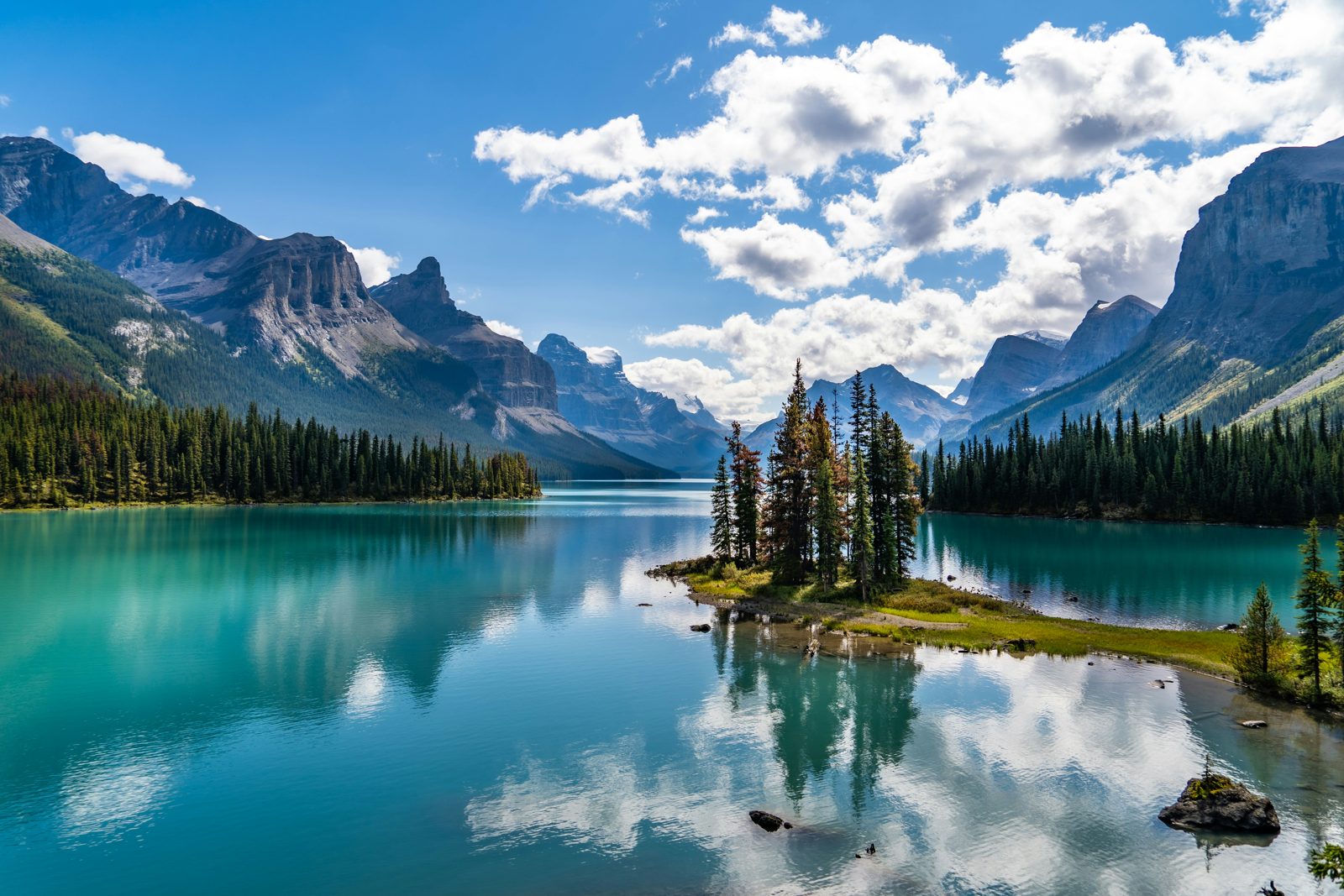
These are two different excursions, not convenient stops on one short loop. Choose one according to access, vehicle size, current operation and your interests. Returning to camp before evening lets you enjoy the trip without adding unnecessary driving.
Miette Road restrictions
Parks Canada describes Miette Road as narrow and winding. It lists a maximum vehicle length of 7.5 metres, or 25 feet, and prohibits trailers and large motorhomes past Miette Campground. Use the designated trailer drop-off arrangements only where allowed and suitable, or leave the camping unit at its booked campsite.
Check the hot springs’ current operating dates and hours separately from the road report. A road being accessible does not mean the pools are open, and a pool schedule does not remove vehicle restrictions. A smaller sightseeing vehicle is the easiest way to organize this outing for many RV travellers.
Maligne Lake
Maligne Lake offers another major mountain-lake experience. The road journey and available parking need planning for large vehicles. Parks Canada lists only limited parking spaces suitable for RVs and trailers at the lake; that is not a guarantee of a space on arrival.
If you book a cruise or other activity, leave time for the journey and parking. Confirm cancellation policies and current road conditions. Do not treat a timed ticket as justification for speeding or squeezing a large RV into an unsuitable spot.
Closures and places older guides may get wrong
Use Parks Canada’s “What’s open” information and current bulletins before choosing attractions. Wildfire impacts can involve unstable slopes, damaged infrastructure and closures that are not obvious from the highway. A popular name on an old itinerary does not establish safe current access.
In particular, check Maligne Canyon and the Mount Edith Cavell area before adding them to the trip. When Parks Canada last updated its “What’s open” page in mid-September 2026, the Maligne Canyon trailhead and picnic area, the Cavell day-use area and the Cavell Meadows trailhead were all listed as closed, while Maligne Lake Road and Miette Hot Springs were open. Closures change, so confirm before you go and do not guess a reopening date. If a location is closed, respect barriers and choose another established destination.
Recovery areas also deserve considerate visiting. Support operating businesses and follow local instructions, while allowing residents and workers space to continue rebuilding. Burned forest is not an invitation to enter restricted land or stop anywhere along the road.
Optional Icefields Parkway day
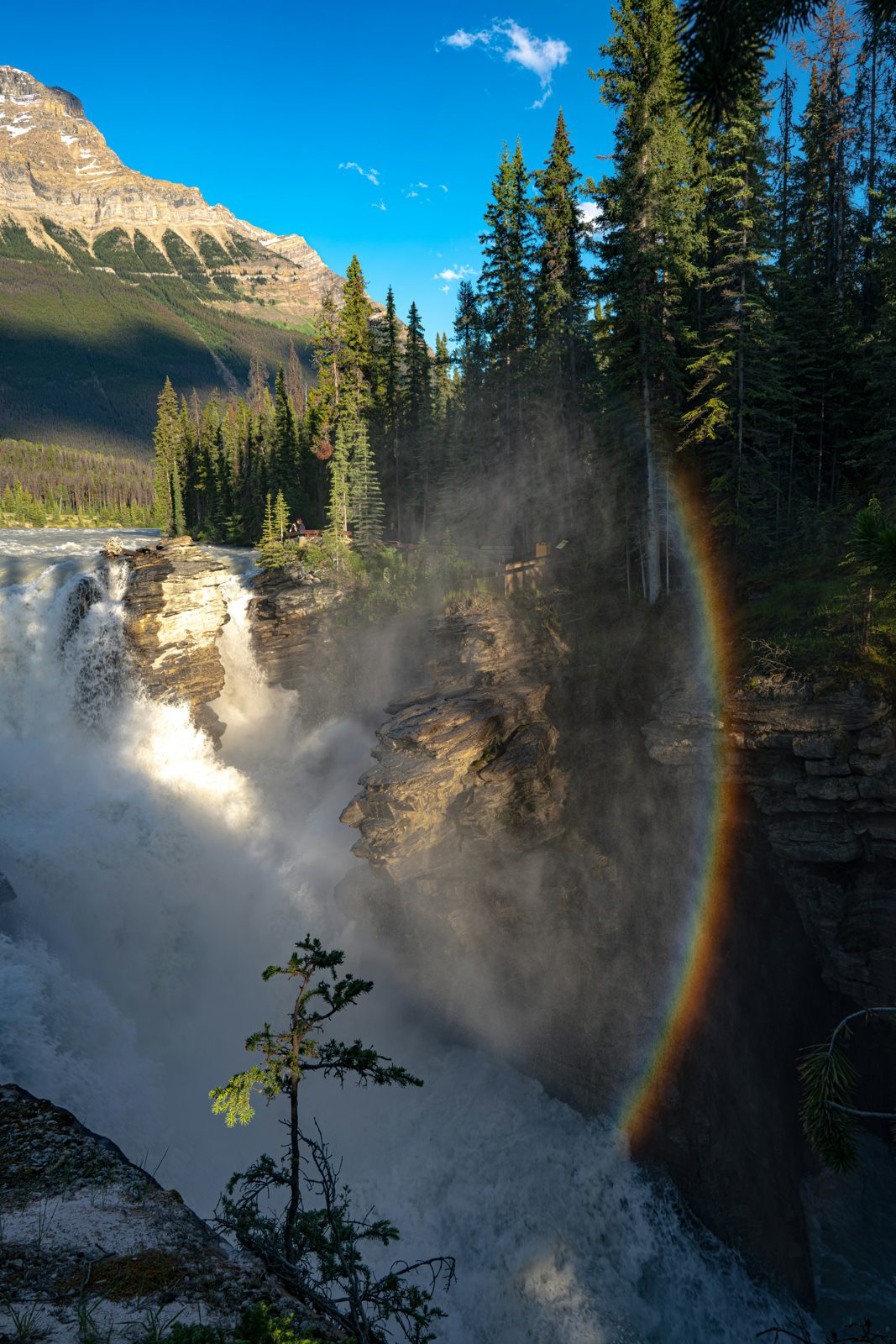
A short outing south of Jasper can introduce the Icefields Parkway without turning the trip into a full Calgary-to-Jasper route. Athabasca Falls is one destination to research, with designated but limited RV-suitable parking according to Parks Canada. Check its current access and use the marked walkways and barriers.
A longer day to the Columbia Icefield is a substantially different commitment. It adds more driving, fuel planning and time away from camp. Choose it only if you actually want the extended day and the weather supports it. Do not add it casually to a day already containing Maligne Lake or a long hike.
Sunwapta Falls has parking limitations for large RVs and trailers, so do not assume every Parkway stop fits your rig. Match the outing to confirmed access and use a smaller vehicle when appropriate. The main highway and a trailhead lot can have very different space constraints.
If the Parkway is the main goal, extend your trip and use a dedicated route plan. An Edmonton–Jasper trip is strongest when it gives Jasper time, rather than using it as a rushed staging point for another distant destination.
Three-day RV itinerary
| Day | Suggested plan | Overnight |
|---|---|---|
| 1 | Edmonton to Hinton for supplies; continue to Jasper and check in | Jasper campground |
| 2 | Jasper town and one nearby lake outing | Same campground |
| 3 | Short morning walk, tank service and return through Hinton | Home or next destination |
This is a realistic introduction with one full destination day. Avoid spending that day entirely on another long drive unless the drive itself is your main interest. A nearby lake and village visit can produce a better weekend than trying to reach every headline attraction.
If you arrive late on day one, rest first. The mountains will still be there in the morning. Returning tired after an overloaded day two can make the final highway journey less enjoyable and harder to manage.
Five-day RV itinerary
| Day | Suggested plan | Overnight |
|---|---|---|
| 1 | Travel via Edson and Hinton; settle into camp | Jasper base |
| 2 | Town, Pyramid Lake or another suitable nearby outing | Same base |
| 3 | Miette or Maligne excursion, with appropriate transport | Same base |
| 4 | Hike, short Parkway outing or weather-flexible day | Same base |
| 5 | Easy departure and return to Edmonton | Home or onward trip |
A seven-day visit can add more rest, another permitted hike and an outside-park overnight on the approach or return. You do not have to use all seven days for driving. Jasper works well for travellers who want to wake up in the same campground and choose the day’s outing according to weather.
Fuel, groceries and dump-station strategy
Start with supplies from Edmonton, use Edson for a break if needed and treat Hinton as the main checkpoint before the park. Jasper has services for resupply, but buy medications, specialty groceries and essential equipment before relying on smaller destination shops. Browse campgrounds with dump stations to compare your options.
Refuel with a margin for the day’s side trips. Do not let an unexpectedly long excursion reduce the reserve you need to return to services. Use stations with enough turning room and check canopy height before entering with a tall motorhome.
Verify water and dump arrangements with the campground you book. For an electrical-only or unserviced stay, plan the number of nights around your real tank use. Dump stations may have seasonal limitations, maintenance interruptions or access rules for non-guests. Check potable water separately and avoid connecting a drinking-water hose to an unlabelled supply.
A family can fill the gray tank quickly even when the black tank is far from full. Use campground showers when appropriate, conserve dishwashing water and plan a proper service stop. Keep wastewater equipment in a separate storage area from clean-water gear.
Mountain driving, wildlife and connectivity
The main approach is less complex than a route across multiple high passes, but it still requires attention. Watch changing speed limits, wildlife, roadwork and traffic stopping unexpectedly. Use suitable gears on descents and allow additional following distance for the loaded RV.
Do not stop partly on the road for animals. If there is no safe designated space, continue and let passengers enjoy the view from inside. Keep people and pets away from wildlife and never feed animals. A clean campsite is essential even beside a busy town.
Carry offline maps and reservation confirmations. Connectivity varies across mountain areas and some campground locations. If work or a call is essential, confirm a reliable connection option in advance instead of relying on general claims about town coverage.
Check 511 Alberta, Parks Canada bulletins and the weather before each longer outing. These sources answer different questions: a highway report does not establish trail access, and a trail listing does not tell you whether the road to it has an incident.
Best months and a realistic trip budget
June through September is a useful general target. July and August have strong demand, while early summer may retain snow at elevation. September can offer cooler walks and less intense traffic, but some services begin reducing hours and cold nights become more likely. More best RV trips in Alberta are listed on our trips page.
Outside summer, verify campground water, washrooms, electrical options and snow access carefully. Winter RV camping requires suitable equipment and experience. A year-round town destination does not make every RV site or scenic road available year-round.
Budget separately for national park admission, camping, fuel and activities. Check current prices and temporary programs directly. A previous summer’s promotion should not be assumed for a future booking, and a campground permit does not automatically cover every activity you might add.
Before leaving, inspect the RV again, stow outdoor equipment and service the tanks where practical. Make the return journey a planned travel day with a proper break rather than squeezing it after a long morning excursion.
Frequently asked questions
How far is Edmonton to Jasper by RV?
About 365–370 km to the Jasper area, with additional distance to your specific campground and sightseeing stops.
Is Highway 16 suitable for large RVs?
The main route is used by RVs and commercial vehicles. Your campground and side-road choices may have tighter dimensions, and the vehicle must be prepared for loaded highway and mountain travel.
Where should I stock up before Jasper?
Edmonton is best for the initial shop. Edson and especially Hinton are useful service stops before entering the park from the east.
Is Wabasso open for camping in 2026?
Parks Canada lists Wabasso as closed for the 2026 camping season. Check the current year’s official information for future trips.
Can I tow a trailer to Miette Hot Springs?
Parks Canada prohibits trailers and large motorhomes beyond Miette Campground on the narrow, winding road and lists a 7.5-metre vehicle-length limit. Plan suitable transport and follow current restrictions.
Do I need to drive the Icefields Parkway?
No. Jasper town, nearby lakes and eastern park outings can fill a rewarding visit. Add the Parkway only when you have the time and a separate plan.
Is a three-day trip worthwhile?
Yes, for a short mountain break with one full sightseeing day. Five days provides a much more relaxed first visit.
Official sources
Rules, fees, and services change. Check these directly before you travel.