
The short answer
A Calgary to Banff and Jasper RV trip is one of the best ways to experience the Canadian Rockies. The route combines the Bow Valley, Banff National Park, Lake Louise, the Icefields Parkway, the Columbia Icefield, Athabasca Glacier and Jasper National Park.
You can drive Calgary to Jasper in a long day, but that misses the point of taking an RV. A better plan is 5 to 7 days, with time for sightseeing and several nights in campgrounds rather than simply measuring the trip by kilometres.
The classic route is Calgary → Canmore → Banff → Lake Louise → Icefields Parkway → Saskatchewan River Crossing → Columbia Icefield → Athabasca Falls → Jasper.
Check before you go. Mountain weather, campground availability, wildfire recovery, road conditions, shuttle rules and attraction access can change. Verify current information with Parks Canada and provincial road services before each driving day.
Trip at a glance
| Trip information | Details |
|---|---|
| Starting point | Calgary, Alberta |
| Main destinations | Canmore, Banff, Lake Louise and Jasper |
| Main scenic road | Icefields Parkway / Highway 93 |
| Recommended trip | 5 to 7 days |
| Best months | June through September |
| Trip type | Motorhome, travel trailer, fifth wheel or truck camper |
| Major RV concern | Mountain grades, campground length limits and attraction parking |
| National parks | Banff and Jasper, plus the Icefields Parkway corridor |
| Ferries | None on the standard route |
| Cell service | Limited in some remote mountain sections |
- 5 days: workable for the major highlights.
- 6 days: a comfortable pace with useful sightseeing time.
- 7 days: best for hiking, photography and slower campground stays.
- 8 to 10 days: ideal if you want extra time in Banff and Jasper.
Why take this RV route?
The Calgary-to-Jasper journey is much more than a drive between two Alberta cities. Calgary provides an easy place to stock up on groceries, fuel and RV supplies. See campgrounds in the Calgary area if you want a night there first. Canmore and Banff introduce the Rockies, while Lake Louise marks the beginning of the spectacular Icefields Parkway experience.
From Lake Louise, Highway 93 North travels through some of the most dramatic mountain scenery in Canada. The road passes Bow Lake, Peyto Lake, Saskatchewan River Crossing and the Columbia Icefield before descending toward Jasper.
For an RV traveler, the major advantage is flexibility. You can carry your accommodation with you, stay near the scenery and build your trip around campgrounds rather than hotel availability.
Day 1: Calgary to Canmore and Banff
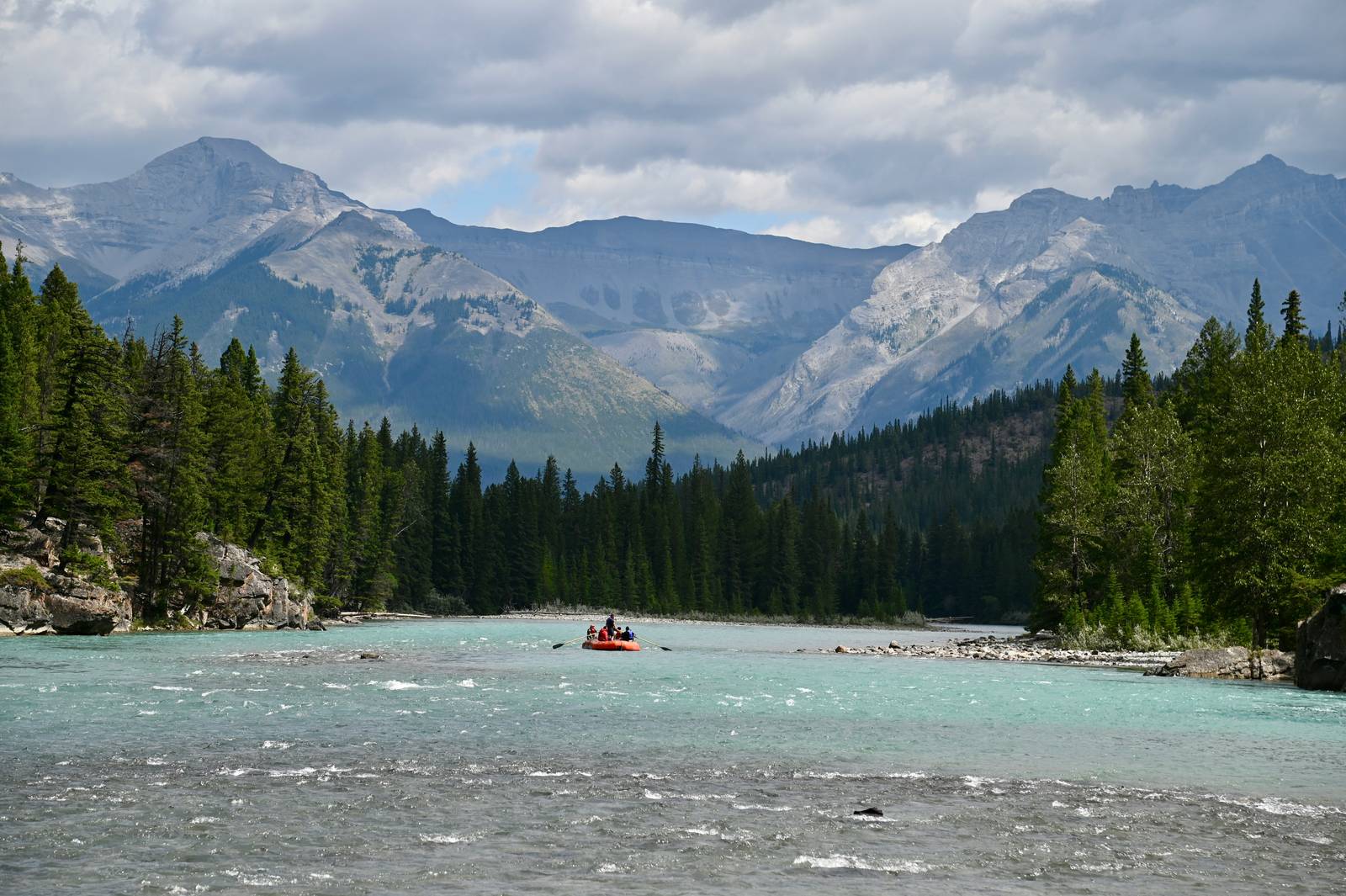
The first part of the trip is comparatively easy. Take Highway 1 west from Calgary toward the mountains. Canmore is the first major mountain community and an excellent place to make a final grocery, fuel or RV-supply stop before spending several days in the national parks.
Banff is farther west and provides the classic first taste of the Canadian Rockies. If you arrive early, spend the afternoon exploring Banff Avenue, Bow Falls, Vermilion Lakes or another nearby attraction.
Why Canmore is useful for RVers
- Good place for groceries and fuel.
- Convenient access to the Bow Valley.
- Useful alternative to staying directly in Banff.
- Easy place to check supplies before heading toward Lake Louise.
RV camping in Banff
Tunnel Mountain Trailer Court is one of the most useful Banff options for larger RVs. See all Banff National Park campgrounds. Parks Canada lists full three-way hookups, drinking water, flush toilets, showers and a sewage dump station. Some sites can accommodate units over 50 feet, but individual site and configuration limits still apply.
For a large motorhome or truck-and-trailer combination, always check the exact campsite length rather than assuming that the campground's overall capacity applies to every site. Our big-rig-friendly campgrounds list is a good place to start.
Things to do in Banff
Give Banff at least one full day if your schedule allows. Popular stops include Banff Avenue, Bow Falls, Vermilion Lakes, Lake Minnewanka, Two Jack Lake, the Banff Gondola and the Upper Hot Springs.
With a large RV, consider leaving the rig at your campground when possible. Your RV is your accommodation on wheels; it does not have to be your sightseeing vehicle. Busy attraction parking lots can be difficult for long motorhomes and trailer combinations.
Lake Louise and Moraine Lake by RV
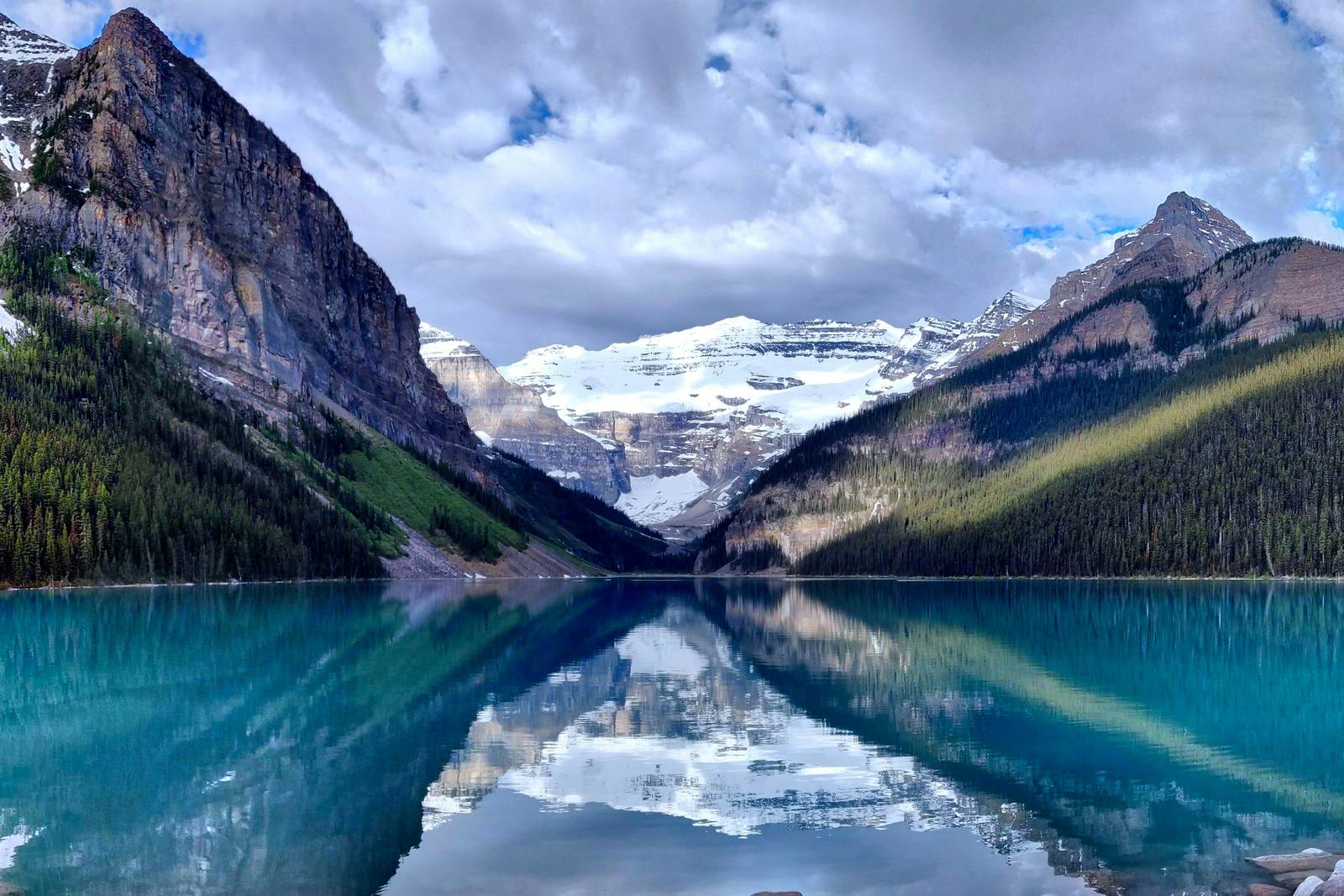
Lake Louise requires more planning than a normal roadside stop. Parks Canada says RVs and oversized personal vehicles are not permitted to park at the Lake Louise lakeshore, and RV travellers are strongly encouraged to reserve a Parks Canada shuttle from the Lake Louise Park and Ride.
Moraine Lake Road is closed to personal vehicles year-round. Do not plan on driving your RV to Moraine Lake.
- Leave the RV at a suitable campground or designated parking location.
- Reserve your Parks Canada shuttle in advance.
- Use the Lake Louise Park and Ride when appropriate.
- Visit Lake Louise and/or Moraine Lake by shuttle.
- Return to your RV before continuing the road trip.
For the 2026 season, Parks Canada lists Lake Louise shuttle service from May 15 through October 12 and Moraine Lake shuttle service from June 1 through October 12, subject to current conditions and schedules.
Day 2 or 3: Lake Louise to the Icefields Parkway
Once you leave Lake Louise, the trip changes character. Highway 93 North becomes the Icefields Parkway, a scenic mountain route connecting Lake Louise and Jasper.
Do not treat the Parkway as a normal highway where the goal is simply to cover the kilometres. Plan several hours for viewpoints, short walks, photographs and wildlife sightings.
Crowfoot Glacier
Crowfoot Glacier is one of the first major scenic viewpoints north of Lake Louise. It is a useful quick stop and gives you an early look at the glacial landscape that dominates the northern portion of the route.
Bow Lake
Bow Lake is one of the classic Icefields Parkway stops. It sits beneath an impressive mountain backdrop and makes a good place to stretch your legs or have a picnic.
Peyto Lake and Bow Summit
Peyto Lake is one of the most recognizable views in the Rockies. The elevated viewpoint looks down over the intensely coloured lake and surrounding peaks.
Bow Summit is the highest point of the Icefields Parkway, at roughly 2,070 metres. Weather at this elevation can be very different from conditions in Calgary or Banff, even during summer.
Saskatchewan River Crossing
Saskatchewan River Crossing is an important planning point. Before heading farther north, make sure you have enough fuel, food and water and know where you are spending the night.
Fuel and services are much more limited along the Parkway than in Calgary, Canmore, Banff or Jasper. Do not plan your fuel stops based on your best-case mileage.
RV camping near the Columbia Icefield
One of the most useful strategies is to break the Parkway into two days. Instead of driving all the way to Jasper in one push, spend a night near the Columbia Icefield when a suitable site is available.
Parks Canada lists primitive RV and trailer parking at the Icefields Centre for the 2026 season, and there are other basic campgrounds along the Parkway. None offer the services of a full-hookup campground, so arrive prepared with water, food and battery capacity. Check each campground's RV length limit and whether it takes reservations before you commit. Our Icefields Parkway guide covers the Parkway campgrounds in more detail.
Columbia Icefield and Athabasca Glacier
The Columbia Icefield is one of the major highlights of the Calgary-to-Jasper RV trip. It feeds several major glaciers and creates the enormous glacial landscape visible from the Parkway.
The Icefields Centre provides a logical place to stop, take a break and explore the area. Large RVs have designated parking options, although you should still follow current parking instructions and posted restrictions.
Parker Ridge
Parker Ridge is a popular hike overlooking the Saskatchewan Glacier. It is roughly 5 km return with a climb of about 250 metres, so allow several hours rather than squeezing it between other stops. Check current trail conditions first.
Wilcox Pass
Wilcox Pass is another major hiking option near the Columbia Icefield. If hiking is a priority, consider giving yourself a full day around the Icefields rather than trying to combine every attraction with a long driving day.
Sunwapta Falls and Athabasca Falls
After the Columbia Icefield, continue north toward Jasper. Sunwapta Falls comes first, followed by Athabasca Falls, where the Athabasca River drops through a dramatic canyon.
Large-RV travellers should be cautious at Sunwapta Falls. Parks Canada notes that the parking area is not recommended for large RVs or trailers because parking is limited. Athabasca Falls is a worthwhile stop, but check the parking signs for vehicle length.
This illustrates an important rule for this trip: the fact that your RV can drive the highway does not mean it will fit at every attraction.
Arriving in Jasper: RV camping
Jasper has several important campground options, but wildfire recovery has changed the campground picture. Do not rely on older Jasper RV articles without checking current Parks Canada information.
For 2026, Parks Canada reports that a substantial portion of Jasper's pre-wildfire frontcountry campground inventory is available, while some locations remain closed. See our Jasper National Park campgrounds page as well.
Whistlers Campground
Whistlers is one of the largest Jasper-area campgrounds and offers a mix of full-service, electrical and unserviced camping. Parks Canada lists 781 sites for the 2026 season and says it can accommodate most motorhome and trailer sizes.
Wapiti Campground
Wapiti is another useful option near Jasper. Parks Canada lists electrical and unserviced sites for 2026. Its location along the Athabasca River makes it a convenient base for exploring Jasper.
Wabasso Campground is not open to the general public for 2026 while recovery work continues. Always check the current Jasper campground page before booking.
Important Jasper closures for 2026
Two attractions that appear in many older Jasper travel articles should not be included in a 2026 itinerary without checking their status.
Maligne Canyon
Maligne Canyon remains closed for the 2026 season because of wildfire recovery and safety work, including assessment of slope stability and debris-flow risks.
Mount Edith Cavell
Cavell Road remains closed for the 2026 season. Even when operating, the road has significant vehicle restrictions and is not appropriate for many large motorhomes and trailer combinations.
These closures are a good reason to check Parks Canada's current Jasper "What's Open" information immediately before the trip.
Exploring Jasper
Give Jasper at least one full day. Two days is better if you have the time.
Depending on current access and conditions, popular areas include Pyramid Lake, Pyramid Island, Patricia Lake, Lake Annette, Lake Edith, the Valley of the Five Lakes, Maligne Lake and the Jasper townsite.
Maligne Lake can be a particularly rewarding destination, but large RV travelers should check current parking information before heading out because parking capacity is limited in some areas.
Fuel, groceries and dump stations
Fuel planning matters on the Icefields Parkway. Start with a comfortable fuel level rather than assuming that every major stop will have a convenient fuel station. Our fuel planner can help.
- Calgary: best place for your main grocery shop and RV supplies.
- Canmore: excellent final major resupply point before the mountain portion.
- Banff: convenient for supplies, although prices can be higher.
- Saskatchewan River Crossing: treat as a strategic checkpoint rather than your only fuel plan.
- Jasper: excellent place to resupply after completing the Parkway.
Dump stations and water services are seasonal. Banff's Tunnel Mountain Trailer Court has a sewage dump station, and Jasper's larger campgrounds may offer dump facilities, but verify current operation before relying on them. Do not count on dumping anywhere along the Parkway itself. Dump and fill water in Banff or Lake Louise before you start, and again in Jasper.
Mountain driving tips for RVs
The route is manageable for an experienced RV driver, but three things deserve particular respect: long climbs, long descents and rapidly changing mountain weather.
On climbs
- Use an appropriate gear rather than trying to maintain passenger-car speeds.
- Watch engine and transmission temperatures.
- Let faster traffic pass when safe.
- Keep plenty of distance from other vehicles.
On descents
- Use lower gears when appropriate.
- Avoid riding the brakes continuously.
- Keep a conservative speed.
- Remember that a trailer can push the tow vehicle downhill.
If you are new to mountain driving, don't schedule a huge mileage day immediately after the Icefields Parkway. The scenery is distracting and the road demands more concentration than a flat highway.
What size RV works best?
The main highway route is suitable for large RVs, but campground loops, attraction parking areas and side roads are where vehicle size becomes important.
- Class B: easiest to park and maneuver.
- Class C: an excellent compromise for this route.
- Class A: very workable, but plan fuel, braking distance and parking carefully.
- Travel trailer: well suited if you are comfortable with mountain towing.
- Fifth wheel: very capable, but combined length makes campsite selection especially important.
Before booking, check maximum site length, combined vehicle length, pull-through availability and access-road restrictions.
Cell service and offline planning
Do not expect uninterrupted cell service along the entire route. Remote sections of the Icefields Parkway and mountain parks can have weak or nonexistent coverage.
Before entering a remote section, download offline maps and save campground confirmations. Carry food, drinking water and basic emergency supplies, and don't make your entire trip dependent on a phone connection.
Wildlife and roadside safety
You may see elk, bighorn sheep, mountain goats, deer, bears, moose and other wildlife. Wildlife is part of the attraction, but it can also create sudden traffic problems.
If animals are near the road, slow down and stay in control. Do not stop in an unsafe location or block traffic for a photograph. Never approach or feed wildlife.
Wildlife jams can appear suddenly, so leave enough following distance to react safely.
Best time of year for Calgary, Banff and Jasper by RV
June
June is a strong choice for an early-summer trip. Some high-elevation areas can still have snow, but summer services are opening and daylight is long.
July and August
These are the busiest months. Expect crowded campgrounds, busy attractions and strong demand for Lake Louise shuttle reservations. Book important stops ahead.
September
September can be one of the best months for RV travelers who prefer cooler temperatures and fewer crowds. Conditions are more variable as the month progresses.
October
October can be beautiful, but snow can return to the higher passes and many campgrounds close. Treat the trip as a shoulder-season mountain journey rather than an extension of summer.
Five-day Calgary to Jasper RV itinerary
| Day | Route and plan | Overnight |
|---|---|---|
| 1 | Calgary → Canmore → Banff. Stock up and explore Banff. | Banff or Canmore |
| 2 | Banff → Lake Louise → Bow Lake → Peyto Lake. | Lake Louise area or Parkway campground |
| 3 | Continue to Saskatchewan River Crossing and Columbia Icefield. | Icefields area |
| 4 | Columbia Icefield → Athabasca Falls → Jasper. | Jasper |
| 5 | Full day exploring Jasper and accessible surrounding attractions. | Jasper |
Better seven-day itinerary
| Day | Plan |
|---|---|
| 1 | Calgary to Canmore. Settle into the mountains. |
| 2 | Canmore/Banff. Explore Banff and nearby sights. |
| 3 | Lake Louise using the shuttle system when required. |
| 4 | Lake Louise through Bow Lake, Peyto Lake and Saskatchewan River Crossing. |
| 5 | Columbia Icefield, glacier area and optional hike. |
| 6 | Sunwapta Falls and Athabasca Falls, then Jasper. |
| 7 | Full Jasper day. |
RV checklist
Before leaving Calgary
- Fill the fuel tank and check tire pressures.
- Inspect trailer brakes, hitch, fluids and lights.
- Stock groceries and drinking water.
- Check propane and batteries.
- Download offline maps.
- Confirm campground reservations.
- Check Lake Louise shuttle requirements if visiting.
Before entering the Icefields Parkway
- Check current road conditions and weather.
- Top up fuel.
- Confirm your overnight plan.
- Carry warm layers and rain gear even in summer.
- Make sure you have enough water and food if camping without hookups.
Road conditions and closures
Mountain conditions can change quickly. Check current information before every major driving day.
- Alberta: use 511 Alberta for road conditions, incidents, construction, cameras and weather-related information.
- British Columbia: if your broader Rockies trip includes BC, use DriveBC.
- Parks Canada: check current campground, trail, shuttle and attraction notices before leaving.
National park passes and campground fees
Coming from the west? See our Vancouver to Calgary by RV guide for the route to Banff.
Banff and Jasper are national parks, and camping fees are separate from park admission. A Parks Canada Discovery Pass can make sense if you are spending several days in national parks or planning additional Canadian park trips.
Fees and reservation rules change, so use Parks Canada's current information rather than relying on old prices found in travel articles.
More route guides: Edmonton to Jasper by RV, Calgary to Waterton Lakes by RV, Calgary to Drumheller by RV, Calgary to Vancouver by RV, RV camping in Alberta and Trans-Canada RV route: west half.
Frequently asked questions
How many days do I need to drive Calgary to Jasper by RV?
Five days is a workable minimum for Calgary, Banff, Lake Louise, the Icefields Parkway and Jasper. Seven days gives you a much better sightseeing pace.
Can large RVs drive the Icefields Parkway?
Yes. Recreational vehicles use the Icefields Parkway, but individual parking areas, campgrounds and side roads can have their own length or vehicle restrictions.
Can an RV park at Lake Louise?
Parks Canada says RVs and oversized personal vehicles are not permitted to park at the Lake Louise lakeshore. Plan around the Parks Canada shuttle and the Lake Louise Park and Ride.
Can you drive an RV to Moraine Lake?
No. Moraine Lake Road is closed to personal vehicles year-round. Access is by Parks Canada shuttle, public transit or authorized commercial transportation.
Is there RV camping near the Columbia Icefield?
Yes. Parks Canada lists primitive RV and trailer parking at the Icefields Centre for the 2026 season, subject to current operating dates and availability.
Is Wabasso Campground open in Jasper?
Wabasso Campground is not open to the general public for the 2026 season while wildfire recovery work continues.
Is Maligne Canyon open?
Maligne Canyon remains closed for the 2026 season because of wildfire recovery and safety work.
What is the best time of year for this RV trip?
June through September is the main RV season. July and August have the most services and visitors, while September can offer a quieter trip if conditions cooperate.
Is Calgary to Jasper a good first mountain RV trip?
It can be, but first-time mountain RV drivers should allow several days, take grades and descents slowly, check weather and road conditions, and avoid excessively long driving days.
Official planning sources
Rules, fees, campground dates and access conditions change. Check these directly before you travel.