
The short answer
Calgary to Drumheller by RV is one of Alberta’s best short trips for families, dinosaur enthusiasts and travellers who want a change from mountain scenery. Instead of a series of high passes, you cross open prairie and descend into the Red Deer River valley, where layered cliffs, hoodoos and fossil discoveries give the landscape a completely different character.
The direct journey is approximately 135–150 km, depending on your Calgary departure point and campground. Allow around one and a half to two hours of driving, then add any stop at Horseshoe Canyon. Three days gives you time for the Royal Tyrrell Museum, a badlands outing and a relaxed return. Five days lets you explore more of the valley without rushing children through a long museum day.
The usual route runs Calgary → Highway 1 east → Highway 9 → Irricana → Beiseker → Drumheller, passing Horseshoe Canyon on the way in. The Highway 9 junction is just east of Chestermere and Langdon. Highway 2 north to Highway 72, then east to Highway 9 at Beiseker, is a common alternative if you start on the north side of Calgary. Check your exact address and current highway conditions before departure. There is no ferry on the main journey. The seasonal Bleriot Ferry belongs to an optional Dinosaur Trail excursion, not the route you must take to reach town. For more on booking and park rules across the province, see our guide to RV camping in Alberta.
Trip at a glance
| Planning item | What to expect |
|---|---|
| One-way distance | About 135–150 km, plus local excursions |
| Driving time | Approximately 1.5–2 hours without sightseeing |
| Recommended visit | 3 days; 5 days for a slower valley stay |
| Best general season | May–September; check attractions and camping outside summer |
| Main attraction | Royal Tyrrell Museum of Palaeontology |
| Other highlights | Horseshoe Canyon, hoodoos, Dinosaur Trail and local history |
| RV concerns | Wind, heat, steep local approaches and limited viewpoint parking |
| Overnight plan | A reserved Drumheller-area RV campground |
This is a relatively approachable route for a first RV weekend, but it still deserves preparation. The destination’s hot summer conditions, occasional thunderstorms and valley terrain create different challenges from driving around Calgary.
Planning the drive from Calgary
Load groceries, drinking water and the basics before leaving. With a short route, it is tempting to skip the usual checks and simply go. Take a few minutes to inspect tires, trailer lights, the hitch and brake controller. A short trip does not make a mechanical fault less inconvenient.
The prairie section gives you space to settle into the vehicle, but wind can be noticeable. Maintain a comfortable speed and allow trucks to pass safely. Watch for changes at rural junctions and do not assume every turn recommended by navigation has room for a long trailer. Stay on the planned highway route unless an official detour directs otherwise.
Horseshoe Canyon makes a worthwhile stop before Drumheller when parking and conditions suit your vehicle. If you are arriving late or the lot is crowded, go straight to the campground and return another morning. The canyon does not need to become a hurried roadside obligation.
The last part of the journey descends into the valley. Reduce speed early and pay attention to traffic, grade changes and your campground’s entrance instructions. Some campgrounds are outside central town, so reaching Drumheller itself is not necessarily reaching your pad.
Where to camp near Drumheller
Private RV parks
A serviced private campground is a practical base when you want cooling, showers and a simple arrival. The Drumheller/Dinosaur Trail KOA is one operator to compare. Check current availability, site lengths, hookup categories and the exact location relative to your chosen attractions. Our directory lists campgrounds in Drumheller with site details to compare.
Do not book solely by the word “dinosaur” in a campground name. Several businesses and destinations in the region use it, and some are quite different distances from the museum. Plot the campground entrance and your planned excursions together before deciding where to stay.
For a family trip, ask about shade, quiet hours, laundry and recreation facilities actually operating during your dates. For a large rig, compare pull-through dimensions, turning space and extra-vehicle parking. If you need 50-amp service, verify it at the individual site rather than assuming every serviced pad has it.
Bleriot Ferry Provincial Recreation Area
Alberta Parks lists a small campground at Bleriot Ferry Provincial Recreation Area, northwest of Drumheller. It may appeal to travellers who prefer a quieter river setting. It should be considered separately from a full-service RV resort: check its current facilities, access and suitability for your equipment.
Its location is useful for a Dinosaur Trail outing, but it is farther from town services. Carry supplies and confirm wastewater arrangements before choosing an unserviced stay. The nearby ferry’s operation is seasonal and condition-dependent; campground access planning should not rely on an unverified crossing.
Choose one base for a short visit
For a three-day trip, two nights in one campground is usually the simplest plan. Check in once, leave chairs and outdoor equipment where allowed, and explore from the same base. Moving between campgrounds in the same valley rarely improves such a short trip enough to justify the packing time.
A trailer and tow vehicle work particularly well here. Leave the trailer connected to its campsite services and use the truck for canyon viewpoints, the museum and local shops. Motorhome travellers should inspect attraction parking beforehand and avoid improvised stops on narrow shoulders.
Day 1: Horseshoe Canyon and settling into camp
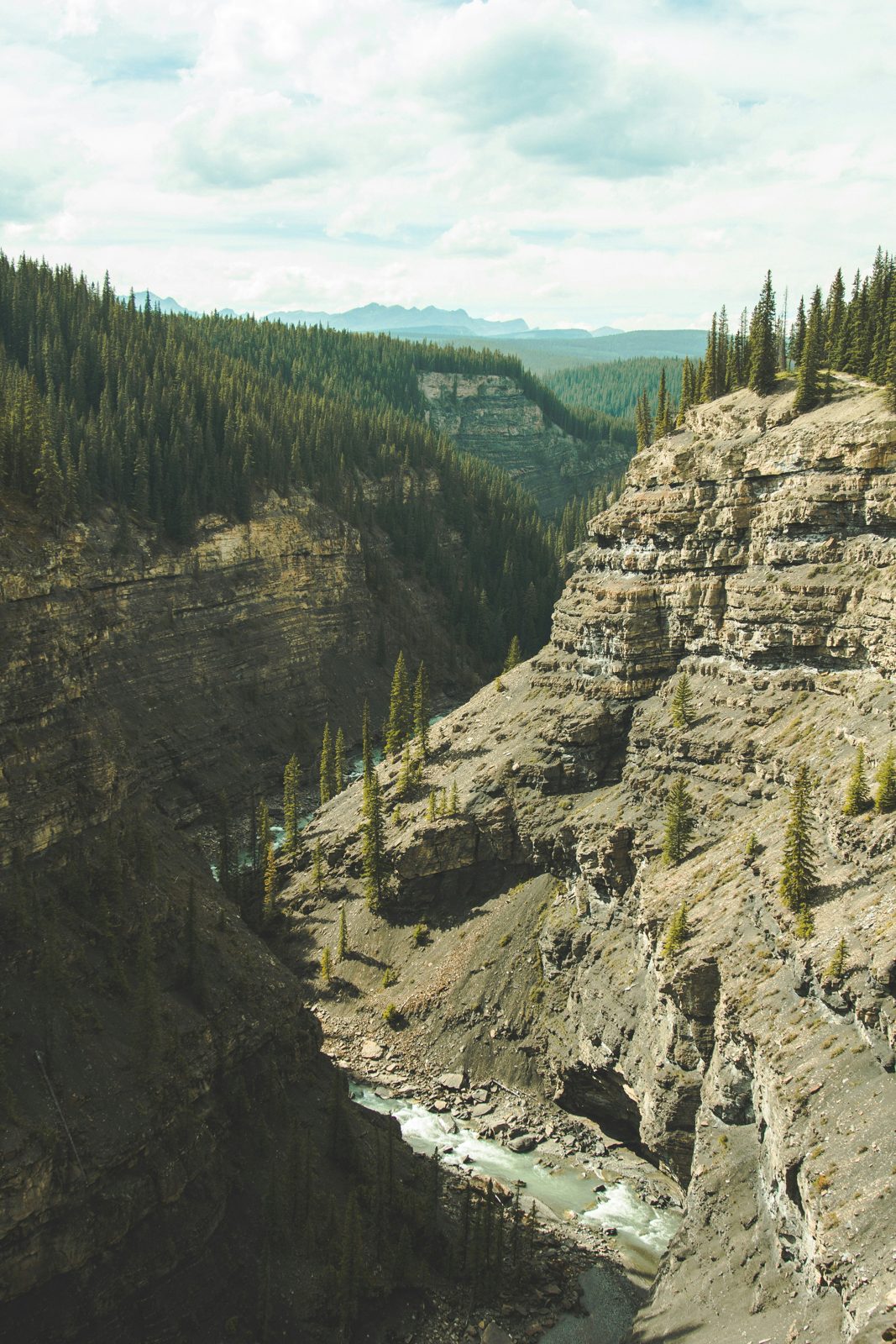
Horseshoe Canyon introduces the badlands before you reach Drumheller. From the rim, the eroded landscape contrasts sharply with the surrounding prairie. A short viewpoint visit can be enough if the day is hot or your group does not want a hike.
If you enter the canyon on a permitted trail, check conditions and carry water. Exposed terrain offers little shade, and wet clay can become slippery and difficult. Avoid exploring during thunderstorms or when an official closure is in place. A dry-looking rim does not guarantee the route below is comfortable or safe.
Once in town, buy anything you forgot and head to your campground. A simple first afternoon allows you to learn the site layout, check electrical service and plan the museum day. Confirm the next day’s opening hours, tickets and any programs you intend to book.
In the evening, take a local walk or enjoy dinner at camp. The first day does not need a museum visit, a canyon hike and a drive to the hoodoos. Saving the main attraction for a rested morning helps everyone appreciate it more.
Day 2: Royal Tyrrell Museum
The Royal Tyrrell Museum is the central reason many people visit Drumheller. Treat it as a substantial experience rather than a quick stop between viewpoints. Allow several hours, with breaks appropriate to your group. Children who love the first dinosaur gallery may still need food and a rest before the later exhibits.
Use the museum’s official visitor pages to check admission, opening hours, parking directions and available activities. Hours can differ by season and day. Book any timed experience separately where required, and do not assume a general admission ticket includes every program.
Arrive with an organized plan for the RV. Follow designated parking instructions and keep the vehicle within its space. If towing, confirm that the full combination fits without obstructing circulation. A smaller vehicle is useful when you have left the trailer at camp, especially during busy summer arrivals.
You do not need detailed palaeontology knowledge to enjoy the museum. Look for the story behind the fossils: what scientists can infer about the animals, how specimens are prepared and how the landscape preserves evidence of ancient environments. Children can choose one favourite dinosaur and try to find out more about it instead of racing to photograph every skeleton.
After the museum, keep the rest of the day light. A short permitted walk in the surrounding area, lunch and a quiet afternoon can be a better pairing than another long drive. If the weather is extremely hot, the museum day also gives you a useful indoor alternative to exposed canyon exploration.
The hoodoos and Hoodoo Trail drive
The Drumheller hoodoos lie along the valley southeast of town and make a natural separate outing. These sandstone formations are fragile, so use the designated viewing areas and respect barriers. Climbing a formation for a photograph damages the feature that everyone came to see.
Choose a cooler part of the day when possible. Bring drinking water, sun protection and comfortable shoes, even for a short visit. A parking lot beside the road does not mean the walking surface is smooth or shaded. Check the current site information and any access restrictions before setting out.
Combine the outing with one or two nearby stops rather than an exhaustive list. The scenery along the road is part of the experience. Pull over only in designated spaces that safely accommodate your RV, and never stop partly in the traffic lane because a view looks dramatic.
You can also research the Atlas Coal Mine near East Coulee for local industrial history. Confirm the current program schedule, tour requirements and parking arrangements directly with the operator. It offers a different story from the museum and can broaden a trip beyond dinosaurs without adding another distant destination.
Dinosaur Trail, Horsethief Canyon and Bleriot Ferry
The Dinosaur Trail is an optional scenic valley circuit. Its attractions include viewpoints and the seasonal Bleriot Ferry crossing. The route is best treated as a flexible outing, particularly when travelling in a large motorhome or towing a trailer.
Horsethief Canyon and Horseshoe Canyon are different locations. Check your map carefully when planning the day. Trying to fit both into an afternoon because the names sound related can create more driving than expected. One canyon at an unhurried pace can be enough for a short trip.
Before including the ferry, consult Alberta’s current ferry information and 511 Alberta. Water conditions, operating dates and interruptions affect availability. For a long or low-clearance combination, ask the operator about suitability and follow loading instructions. A small cable ferry has a different approach from a major coastal vehicle ferry.
If the ferry is not running or your combination is unsuitable, visit attractions from their respective sides by road and retrace your route. Do not make the crossing a requirement for reaching an overnight reservation. Travelling with a smaller sightseeing vehicle gives you more flexibility, but current operating information still matters.
Three-day RV itinerary
| Day | Suggested activities | Overnight |
|---|---|---|
| 1 | Calgary to Drumheller; optional Horseshoe Canyon; campground check-in | Drumheller area |
| 2 | Royal Tyrrell Museum; easy afternoon in town or at camp | Same campground |
| 3 | Hoodoos in the morning; lunch; return to Calgary | Home or next destination |
This plan gives the museum the time it deserves and keeps the return day manageable. If weather is better on day two for outdoor exploration, swap the museum and hoodoo visits after checking tickets and opening hours. Avoid locking every activity into a fixed time unless a booking requires it.
For families, include regular meal and rest breaks. The attractions are close enough that you do not need to eat every meal while driving. Return to the campground for lunch when convenient, recharge devices and let children have some ordinary play time between learning experiences.
Five-day RV itinerary
| Day | Suggested activities | Overnight |
|---|---|---|
| 1 | Arrive via Horseshoe Canyon and settle into camp | Drumheller area |
| 2 | Museum and a relaxed town visit | Same campground |
| 3 | Hoodoos, East Coulee and an optional booked heritage tour | Same campground |
| 4 | Dinosaur Trail viewpoints; ferry only if appropriate and operating | Same campground |
| 5 | Easy morning, tank service and return to Calgary | Home or onward trip |
The extra days do not require extra campground moves. They let you avoid midday heat, repeat a favourite outing and adapt to wind or rain. A flexible day also gives you room for a museum program that is available only at a particular time.
If you would rather add another region, extend the trip after this valley stay. Do not squeeze a distant park into the same day as a major Drumheller attraction simply because both have dinosaur connections.
Drumheller is not Dinosaur Provincial Park
This distinction prevents one of the most common itinerary mistakes. Dinosaur Provincial Park is near Brooks, not in Drumheller. Alberta Parks places it about 48 km northeast of Brooks and at least two hours’ driving from Drumheller and the Royal Tyrrell Museum.
It can be an excellent separate extension, but it changes the trip’s distance, overnight arrangements and activity bookings. Treat it as another destination with its own campground reservation. Guided experiences and protected-area access rules should be checked directly with Alberta Parks.
For a short Calgary–Drumheller visit, stay focused on the museum and valley. With a week, you could add two or more nights near Dinosaur Provincial Park and build an appropriate loop back to Calgary. Keep the two destinations distinct in navigation, campsite bookings and your expectations.
Fuel, groceries and RV services
Calgary is the easiest place for your initial supplies. Drumheller provides groceries and fuel for the stay, so there is no need to fill every storage compartment for a weekend. Carry enough water and food for a delayed arrival, then resupply in town as needed. Browse campgrounds with dump stations to compare your options.
Use pump layouts suitable for your combination. A downtown station may be convenient for a small vehicle but awkward for a fifth wheel. Inspect the entrance and exit before turning in. If you need propane or mechanical assistance, confirm operating hours before assuming the service is available that evening.
Confirm dump-station access with your campground. For an unserviced river stay, arrange a disposal stop before departure. Ask whether the facility accepts non-guests, whether there is a fee and whether potable water is available. Keep drinking-water equipment separate from wastewater equipment.
Summer heat can increase water use, particularly with children and pets. Plan tank capacity around showers and dishwashing as well as drinking water. If your site has electricity but no sewer, that does not remove the need to manage the gray tank carefully.
Heat, wind and badlands weather
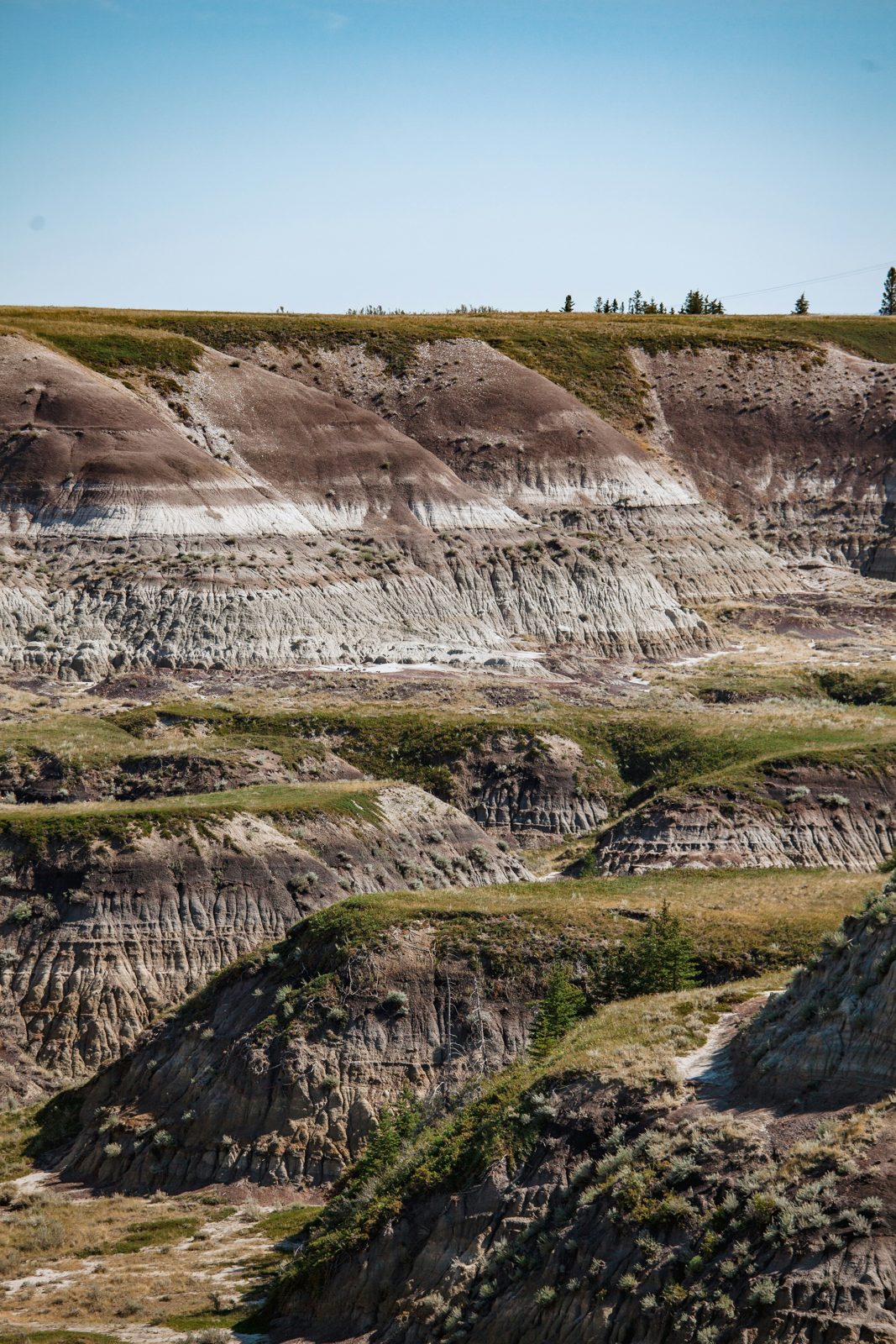
The open badlands can feel much hotter than the air temperature suggests. Plan exposed walks in the morning or evening, carry water and use sun protection. Avoid a long hike immediately after arriving hungry and tired. There is often little shelter once you leave a parking area.
Wind matters both on the road and at camp. Stow awnings when leaving and secure lightweight chairs, mats and shade equipment. A gusty afternoon can turn a pleasant setup into damaged equipment quickly. Park according to campground instructions rather than repositioning across the pad to create your own windbreak.
Thunderstorms can develop rapidly. Check forecasts and move to appropriate shelter before lightning reaches the area. Do not treat an exposed viewpoint as a suitable place to wait out a storm. Wet badlands surfaces can become difficult underfoot; delay a hike if conditions are poor.
Download a local map and save attraction confirmations. Town connectivity may be convenient, but coverage and reception should not be assumed at every canyon or riverside site. Keep the day’s basic plan available without a live connection.
Best season and RV size considerations
Late spring through early autumn is the easiest general period for camping and touring. May and June may offer cooler walks, while July and August bring stronger summer demand and heat. September can be attractive, but check attraction hours, ferry operations and campground services instead of assuming peak-season schedules continue. Our list of big-rig-friendly campgrounds is a good place to start if you tow a long trailer or drive a large motorhome. More best RV trips in Alberta are listed on our trips page.
For autumn or winter visits, the museum may still be the main attraction, but an RV trip requires a different service plan. Confirm heated facilities, water and site access. A campground allowing winter arrivals does not necessarily offer summer hookups or snow-cleared access to every pad.
The main highways suit many RV configurations, while local viewpoints and campground loops can be more restrictive. Know your loaded length and height. A tow vehicle is helpful for valley exploration, and a compact motorhome offers more parking options than a large combination. Neither size removes the need to follow designated parking rules.
Before returning to Calgary, secure the interior, check tires and connections, dump tanks at an authorized facility and review the highway report. Leave enough time that the final drive remains an easy part of the trip rather than a race home.
A museum-and-outdoors packing plan
Keep a small day bag ready with drinking water, hats, layers and any medication you need away from camp. Include a change of shoes if a canyon walk is planned: mud and dusty trails can make the RV floor uncomfortable surprisingly quickly.
For children, a notebook for dinosaur drawings or a short list of questions can make the museum visit more engaging without buying more equipment. Leave room for a favourite exhibit to take longer than expected. The purpose of a short RV trip is to enjoy the destination together, and the most useful itinerary is one you can adjust when the group finds something it loves.
More route guides: Calgary to Waterton Lakes by RV and Calgary to Banff and Jasper by RV.
Frequently asked questions
How far is Calgary to Drumheller by RV?
Approximately 135–150 km one way, depending on your starting address and destination campground. Local valley drives add to the trip total.
How many days should I spend in Drumheller?
Three days is a useful first visit. Five days gives you time for more viewpoints, heritage attractions and a weather-flexible schedule.
Is the Royal Tyrrell Museum in Dinosaur Provincial Park?
No. The museum is near Drumheller. Dinosaur Provincial Park is near Brooks and is a separate destination requiring additional driving.
Do I need to take Bleriot Ferry?
No. It is part of an optional Dinosaur Trail excursion. The Calgary–Drumheller route does not require a ferry crossing.
Can a large RV visit the hoodoos and canyon viewpoints?
Parking suitability varies by location and crowding. Check access beforehand, use designated spaces and consider a smaller sightseeing vehicle when available.
Is this a good first RV weekend?
It can be, because the main journey is short. Prepare for wind, hot weather, valley grades and campsite maneuvering rather than assuming distance is the only challenge.
Can I collect fossils in the badlands?
Do not remove fossils or disturb protected sites. Follow Alberta’s laws and park rules, and use an authorized guided experience if you want to learn about fossil discovery.
Official sources
Rules, fees, and services change. Check these directly before you travel.