
The short answer
Vancouver to Calgary is about 984 km, and it is one of the best RV drives in the country. It crosses the Coquihalla, follows the Trans-Canada Highway through the Columbia Mountains and Rogers Pass, climbs over Kicking Horse Pass through Yoho National Park, and reaches Banff and Calgary. Plan on 5 to 7 days, and build your stops around campgrounds rather than distance.
The direct route is Vancouver, Hope, the Coquihalla Highway, Merritt, Kamloops, Revelstoke, Rogers Pass, Golden, Field, Lake Louise, Banff, Calgary. You can drive it in a long day, but that misses the point of taking an RV. It suits most rigs, including Class A and Class C motorhomes, travel trailers and fifth wheels. What needs planning is the mountain driving, campground length limits, fuel stops, and parking at Lake Louise.
Check before you go. Road conditions, campground dates, fees and access rules change. Look at the official sources at the bottom of this page the morning you drive.
Trip at a glance
| Trip information | Details |
|---|---|
| Distance | About 984 km (611 miles) by the direct route |
| Driving time | Roughly 10 to 12 hours of driving, without sightseeing or delays |
| Recommended trip | 5 to 7 days |
| Best months | June through September |
| Shoulder season | Late May and early October, depending on conditions |
| Main highways | Highway 1 and Highway 5 (the Coquihalla) |
| Mountain passes | Coquihalla, Rogers Pass, Kicking Horse Pass |
| Ferries | None on the standard route |
| National parks | Glacier, Yoho and Banff |
| Cell service | Limited in some mountain areas |
- 5 days: a workable minimum for the main highlights.
- 6 days: a comfortable pace with reasonable driving days.
- 7 days: the best choice for hiking, sightseeing and campground stays.
- 8 to 10 days: room for several nights in Revelstoke, Yoho, Lake Louise or Banff.
How the route works
From Vancouver, Highway 1 runs up the Fraser Valley to Hope. At Hope, most RVers heading for Calgary turn onto Highway 5, the Coquihalla, to Merritt and Kamloops. From Kamloops the route rejoins Highway 1 and runs east through the Shuswap and on to Revelstoke.
East of Revelstoke the highway climbs through Glacier National Park and Rogers Pass to Golden. Past Golden it enters Yoho National Park, crosses Kicking Horse Pass, and reaches Alberta near Lake Louise. The last leg follows the Bow Valley through Banff and Canmore to Calgary.
| Day | Route | Approx. km | Overnight idea |
|---|---|---|---|
| 1 | Vancouver to Kamloops | 350 | Kamloops area |
| 2 | Kamloops to Revelstoke | 210 | Revelstoke |
| 3 | Revelstoke to Golden | 150 | Glacier National Park, Golden or Field |
| 4 | Golden to Banff, via Yoho and Lake Louise | 140 | Lake Louise or Banff |
| 5 | Banff to Calgary | 130 | Calgary, or a second night in Banff |
Day 1: Vancouver to Kamloops
About 350 km and 4 to 5 hours without stops. Fill the tank, the water and the fridge before you leave, then head for Hope, where Highway 1 and Highway 5 meet.
The Coquihalla Highway
The Coquihalla is a modern high-speed highway, but it is also a high mountain route, and the weather can change quickly outside summer. DriveBC warns that spring conditions through high passes can be unpredictable, and winter tires or chains can still be needed. Winter tire rules apply on most BC highways from October 1 through April 30, so they apply now if you are travelling in October.
- Top up fuel at Hope before the climb, and check tire pressures and trailer brakes.
- Secure loose items inside the RV, and look at the weather and highway cameras.
- Stay in a lower gear on descents and do not ride the brakes.
- Leave extra stopping distance, and let faster traffic pass.
Merritt is a useful fuel stop on Highway 5. Kamloops is the best resupply city on the whole route, so stock up there on groceries, propane, fuel, water and medications. It is also a logical first overnight. See campgrounds in Kamloops, or campgrounds at Hope if you start late.
Day 2: Kamloops to Revelstoke
About 210 km and 2.5 to 3 hours. The route follows Highway 1 through Chase, Salmon Arm, Sicamous and Craigellachie.
- Salmon Arm is a good second grocery and fuel stop. See campgrounds near Salmon Arm.
- Sicamous sits between Mara Lake and Shuswap Lake and makes a pleasant lunch stop.
- Craigellachie is where the Canadian Pacific Railway's Last Spike was driven in 1885.
Revelstoke sits between the Selkirk and Monashee mountains and deserves more than a fuel stop. With seven days, spend two nights. Parks Canada's Mount Revelstoke National Park has a frontcountry campground, Snowforest, when it is operating for the season, and there is a provincial park campground, Martha Creek, north of town. See all campgrounds near Revelstoke.
Day 3: Revelstoke to Golden
About 150 km and 2 hours of driving, but allow much more. Viewpoints, historic sites and hiking stops fill this stretch, and it is one of the most spectacular driving days of the trip.
Rogers Pass
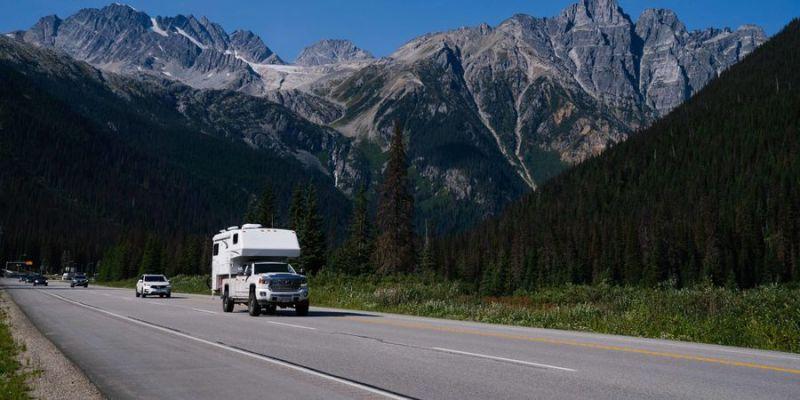
The highway climbs into the Columbia Mountains and crosses the pass through Glacier National Park. Combined with high elevation, steep terrain, truck traffic and fast-changing weather, it calls for a safe speed, the right gear, extra braking distance, and a check of current road conditions. Watch for wildlife.
Camping in Glacier National Park
Parks Canada runs two frontcountry campgrounds here, both rustic and unserviced:
- Illecillewaet is the larger one, about 3 km west of the summit, taking trailers and tents. In 2026 it ran from June 19 to October 12, with some sites reservable and some first-come, first-served.
- Loop Brook is smaller and quieter, about 5 km west of the summit, near historic railway remains. Its 2026 season was June 26 to September 21.
Dates change each year, so confirm them with Parks Canada. Do not expect hookups, and expect little or no cell service. More detail is on our Glacier National Park campgrounds page.
Golden
Golden is a good overnight if you do not camp at Rogers Pass. Refuel, buy groceries and take a break from mountain driving before Yoho. See campgrounds near Golden.
Day 4: Golden to Lake Louise and Banff
About 140 km and 2 hours without stops, though most RVers will want several hours of sightseeing. From Golden, Highway 1 enters Yoho National Park and continues to Field and Lake Louise. Stops worth making include Field, the Spiral Tunnels, the Natural Bridge and Emerald Lake.
Kicking Horse Pass
Kicking Horse Pass is one of the highest points on the Trans-Canada Highway, near the east end of Yoho. The highway follows a historic railway corridor through steep terrain. The Spiral Tunnels were engineered to ease the railway's grades through the Rockies and are one of the best stops on the trip.
Camping in Yoho National Park
Kicking Horse Campground, about 4 km east of Field, is one of the best RV options in Yoho. Parks Canada lists 88 unserviced sites with drinking water, a sani dump, flush toilets, showers, fire pits, a picnic shelter and a playground, with limited cell coverage. Some loops are not suitable for units over 25 feet, so check the loop and site before you book. See Yoho National Park campgrounds.
Lake Louise and Moraine Lake by RV
Lake Louise needs a different plan from a car trip. Parks Canada says RVs and oversized personal vehicles are not permitted to park at the Lake Louise lakeshore, and that RV travellers are strongly encouraged to reserve a Parks Canada shuttle. Moraine Lake Road is closed to personal vehicles year-round. Access is by Parks Canada shuttle, licensed commercial operators or public transit.
- Park the RV at a campground.
- Reserve your Parks Canada shuttle. Seats can sell out, and Parks Canada releases them in batches.
- Drive to the Lake Louise Park and Ride if you want to use it. Parks Canada says it is free for shuttle reservation holders.
- Take the shuttle to the lake, then return to the RV.
In 2026 the Lake Louise shuttle ran May 15 to October 12, and the Moraine Lake shuttle ran June 1 to October 12. Check the current season and the Park and Ride hours with Parks Canada before you plan around it.
Banff and Calgary
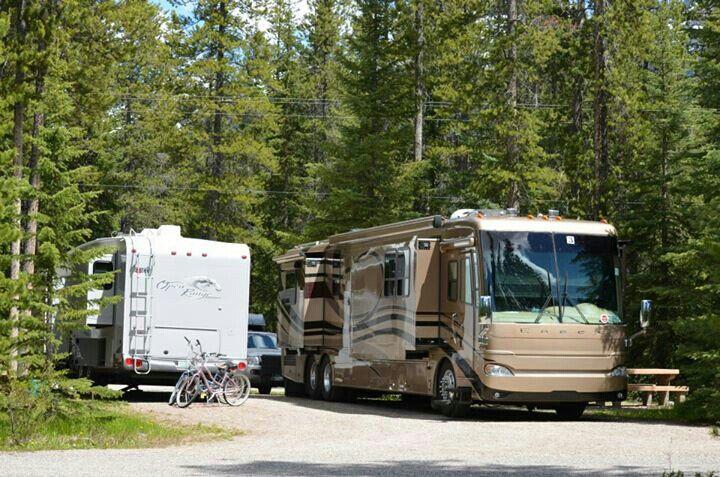
Banff makes an excellent two-night stop. Banff Avenue, Bow Falls, Vermilion Lakes, Lake Minnewanka, the Banff Gondola and the Upper Hot Springs are all close by, and a full day is better than a quick overnight.
Tunnel Mountain Trailer Court is Banff's campground for trailers and larger units. Parks Canada lists 322 sites with full three-way hookups, drinking water, flush toilets, showers and a sewage dump station. Some sites take RVs over 50 feet, but individual site limits apply, so check the site before booking. See Banff National Park campgrounds.
The last day is easy compared with the passes behind you. About 130 km through Canmore to Calgary takes 1.5 to 2 hours. Canmore is a good last stop for fuel, groceries, propane and laundry. See campgrounds in the Calgary area.
Passes and park fees
- You need a national park pass to stop in Glacier, Yoho and Banff. A Parks Canada Discovery Pass covers all three, and it also covers Mount Revelstoke.
- Campground fees and reservations are separate from the pass.
- Check Parks Canada for current fees and booking dates.
A better 7-day itinerary
With a week, you spend less time driving and more time in the places that make the trip worth taking.
| Day | Plan |
|---|---|
| 1 | Vancouver to Kamloops. Overnight in Kamloops. |
| 2 | Kamloops to Revelstoke. Overnight in Revelstoke. |
| 3 | A rest day in Revelstoke, with time for Mount Revelstoke National Park. |
| 4 | Revelstoke over Rogers Pass to Golden or Field. Overnight near Golden or in Yoho. |
| 5 | Yoho National Park and Lake Louise to Banff. Overnight in Banff. |
| 6 | A full day in Banff. |
| 7 | Banff through Canmore to Calgary. |
Where to stop overnight:
| Stop | Nights | Best for |
|---|---|---|
| Vancouver | 1 to 2 | Starting the trip |
| Kamloops | 1 | Breaking up the first driving day |
| Revelstoke | 1 to 2 | Mountain scenery |
| Golden or Field | 1 | Glacier and Yoho |
| Lake Louise | 1 to 2 | Lake Louise and nearby sights |
| Banff | 1 to 2 | The Canadian Rockies |
| Calgary | 1 | End of the trip |
Fuel, groceries and dump stations
- Vancouver: start with a full tank and your main grocery shop.
- Hope and Merritt: fuel before and during the Coquihalla.
- Kamloops: the best resupply point, for groceries, propane, fuel and RV supplies.
- Salmon Arm: a useful second fuel and grocery stop.
- Revelstoke and Golden: refuel before and after Rogers Pass.
- Lake Louise: fuel is available, but do not make it your only fuel plan.
- Canmore: a good final stop before Calgary.
Do not run the tank close to empty in the mountains. Grades raise fuel use, and distances between fuel stops feel longer when you are towing. Our fuel planner can help.
Dump stations are seasonal, so check before you leave. Kicking Horse Campground has a seasonal sani dump and water, and Banff's Tunnel Mountain Trailer Court has a sewage dump station. The Glacier campgrounds are unserviced, so dump before entering the most remote stretch.
Road conditions and closures
Mountain weather changes quickly. Check conditions before you leave each morning, not halfway up a pass.
- British Columbia: DriveBC lists highway conditions, incidents, construction, closures and highway cameras, including cameras along Highway 5.
- Alberta: 511 Alberta lists road conditions, closures, incidents, construction, cameras and weather information.
Passes can close for weather, avalanche control or wildfire. If the Coquihalla is a problem, the Fraser Canyon route through Cache Creek to Kamloops is the usual alternative. It is not the main route we recommend, but know it exists and check conditions before you choose.
Mountain grades and RV driving tips
Three sections deserve respect: the Coquihalla Summit, Rogers Pass and Kicking Horse Pass.
On climbs
- Do not try to match passenger-car speeds. Let faster traffic pass.
- Watch engine temperature and stay in an appropriate gear.
On descents
- Use lower gears and avoid riding the brakes.
- Keep a conservative speed and a large following distance.
- Remember that a trailer can push the tow vehicle downhill.
If you are new to mountain driving, do not schedule a very long day right after a major pass.
RV size considerations
The highway handles large RVs. Campgrounds and parking are where size matters.
- Class B and Class C: easy on this route, and the simplest to park in busy areas.
- Class A: entirely possible. Plan fuel, braking distance and reservations carefully.
- Travel trailers and fifth wheels: well suited, but you need good trailer brakes, and combined length makes campground choice important.
For any large rig, check the maximum site length, the combined length, pull-through availability, access roads and parking rules. Kicking Horse and Tunnel Mountain both show why: each takes large units overall, but individual loops and sites have their own limits. Our big-rig-friendly campgrounds list is a good place to start.
Cell service
Do not count on uninterrupted coverage. Glacier, Rogers Pass and the national parks can be patchy. Before you lose coverage, download offline maps, save your reservations and campground phone numbers, tell someone your itinerary, and carry food and water.
Ferries
No ferry is needed on the standard Vancouver to Calgary route, which is entirely overland. If your trip starts on Vancouver Island, add a BC Ferries crossing first. See our BC Ferries guide.
Best months to go
- June: a very good month. Mountains can still hold snow, but summer services are opening.
- July and August: the busiest time, with long days and everything open. Reserve campgrounds and Lake Louise shuttles ahead.
- September: cooler, quieter, with early fall colour. Some services close later in the month.
- October: possible, but snow can return to the passes, winter tire rules apply, and many campgrounds are closed.
- Winter: not recommended for a casual RV trip.
RV checklist
Before leaving Vancouver
- Fill the fuel tank and check tire pressures, trailer brakes and fluids.
- Check the weather and DriveBC.
- Download offline maps and confirm campground reservations and shuttle plans.
- Stock groceries, check propane, and empty holding tanks if needed.
- Secure items inside the RV, and carry emergency food and water.
Before entering the Rockies
- Check weather, road conditions and highway cameras again.
- Top up fuel and know your next fuel stop.
- Confirm your campground and its RV length limits.
More route guides: Calgary to Vancouver by RV, Vancouver to Kelowna by RV, Vancouver to Whistler to Kamloops by RV, Calgary to Banff and Jasper by RV, Trans-Canada RV route: west half and Icefields Parkway with an RV.
Frequently asked questions
Can you drive from Vancouver to Calgary in an RV?
Yes. The route suits motorhomes, travel trailers and fifth wheels. The main consideration is the mountain terrain, especially the Coquihalla, Rogers Pass and Kicking Horse Pass.
How far is Vancouver from Calgary by RV?
The direct route is about 984 km (611 miles). Your actual trip will be longer with campground detours and sightseeing.
How many days should the trip take?
5 to 7 days makes for an enjoyable RV trip. Three days is possible but means long driving days and little sightseeing.
Is the drive difficult in an RV?
Not for an experienced RV driver, but there are significant grades and descents. The Coquihalla, Rogers Pass and Kicking Horse Pass call for careful speed and gear management.
Do you need a ferry from Vancouver to Calgary?
No. The standard route is entirely overland. If you start on Vancouver Island, you need a BC Ferries crossing first.
Can large RVs drive through Rogers Pass?
Yes. Highway 1 is a major Trans-Canada route used by trucks and RVs. Campground and parking limits can be much tighter than the highway itself.
Can an RV park at Lake Louise?
Parks Canada says RVs and oversized personal vehicles are not permitted to park at the Lake Louise lakeshore, and it strongly encourages RV travellers to reserve a shuttle from the Lake Louise Park and Ride.
Can you drive an RV to Moraine Lake?
No. Moraine Lake Road is closed to personal vehicles. Access is by Parks Canada shuttle, licensed commercial operators or public transit.
Is there RV camping at Rogers Pass?
Yes. Glacier National Park has Illecillewaet and Loop Brook campgrounds. Both are rustic and unserviced, so they are very different from a full-service RV park.
Does Kicking Horse Campground have a dump station?
Yes. Parks Canada lists a seasonal sani dump and water at Kicking Horse Campground in Yoho National Park.
Does Banff have RV campgrounds?
Yes. Tunnel Mountain Trailer Court is for trailers and larger units, with full three-way hookups and a sewage dump station.
Is there cell service the whole way?
No. Coverage can be limited in mountain areas. Download maps before remote sections and do not depend only on your phone.
What is the best month for the trip?
June through September for most RVers. July and August have the fullest services and the most visitors. September can offer the best mix of weather and quiet.
Is it a good first RV trip?
It can be, but a first-time driver should not try it in one or two days. Allow several days, take the passes slowly, and book campgrounds ahead.
Official sources
Rules, fees, and services change. Check these directly before you travel.