
The short answer
New Brunswick's Fundy Coast makes a rewarding RV trip when you plan around campground bases and the tide schedule. A useful route runs Saint John → St. Martins → Fundy Trail Provincial Park → Alma/Fundy National Park → Hopewell Rocks → Moncton area. It combines harbour communities, a scenic coastal drive, national-park walks and the famous tidal rock formations.
Allow roughly 250–350 km for this core one-way itinerary, depending on campgrounds and the connecting roads selected. Six to nine hours of driving spread across the trip is a sensible planning allowance before sightseeing. Five days gives a focused visit; seven days adds separate park and coastal activity days.
The important distinction is between Fundy Trail Provincial Park, Fundy National Park and Hopewell Rocks Provincial Park. They are different destinations, with separate access, fees, booking arrangements and notices. A reservation or pass for one should not be assumed to cover the others.
Trip at a glance
| Planning item | What to expect |
|---|---|
| Route direction | Saint John eastward toward Moncton |
| Core one-way distance | About 250–350 km, before extra outings |
| Driving allowance | 6–9 hours spread across several stages |
| Recommended stay | 5–7 days |
| Main bases | St. Martins area and Alma/Fundy National Park |
| Main timing issue | Tide-dependent coastal access |
| Main road check | Scenic parkway access and campground approaches |
| Ferry requirement | None for the described New Brunswick route |
These figures do not include the journey to Saint John or the return from Moncton. Add that travel before choosing rental dates. A ferry to or from Nova Scotia is an optional separate connection, not a required part of this coast itinerary.
Choose the direction and overnight bases first
Starting in Saint John and ending toward Moncton gives the route a clear eastward progression. It works well for travellers arriving from western New Brunswick or continuing toward PEI or Nova Scotia. Reverse the route if your approach makes that simpler.
Two principal bases are usually enough for a short visit: one near St. Martins for the scenic provincial park and another near Alma for the national park and eastern coast. A third night closer to Hopewell Cape or Moncton can help when a specific tide window or onward departure matters.
Do not choose a campground solely because it uses “Fundy” in its name. Measure the actual drive to the desired attraction and check the site's access, service category and equipment limit. A place near one part of the bay may be far from another.
For a larger RV, a stable base and smaller sightseeing vehicle can simplify coastal stops. A motorhome without a separate car can still work, but parking needs checking before each outing. Keep the number of small viewpoints modest on transfer days.
Saint John: a practical gateway day
Use the Saint John area for the main arrival tasks: fuel, groceries and a suitable campground night if needed. A city visit can be part of the trip, but it deserves a separate transport plan rather than taking the RV toward unfamiliar downtown parking. If you are collecting a rental, our RV rentals page explains how renting works.
The harbour and city attractions offer a useful introduction to the region. Choose one or two interests and verify opening hours and suitable visitor access. If visiting a tidal viewpoint, check the site's own information; a general Bay of Fundy tide table does not explain every local viewing condition.
Keep arrival day realistic. Travellers coming a long distance may prefer to settle into camp and leave the city outing for the next morning. A rested departure toward St. Martins is more useful than an evening spent trying to recover a crowded schedule.
Before leaving the city, save the campground's recommended route and entrance. A coastal village name is not a complete arrival instruction for a long combination. Check the final roads and avoid using an attraction parking lot as the first place to decide where to sleep.
St. Martins: harbour scenery and tide-aware visits
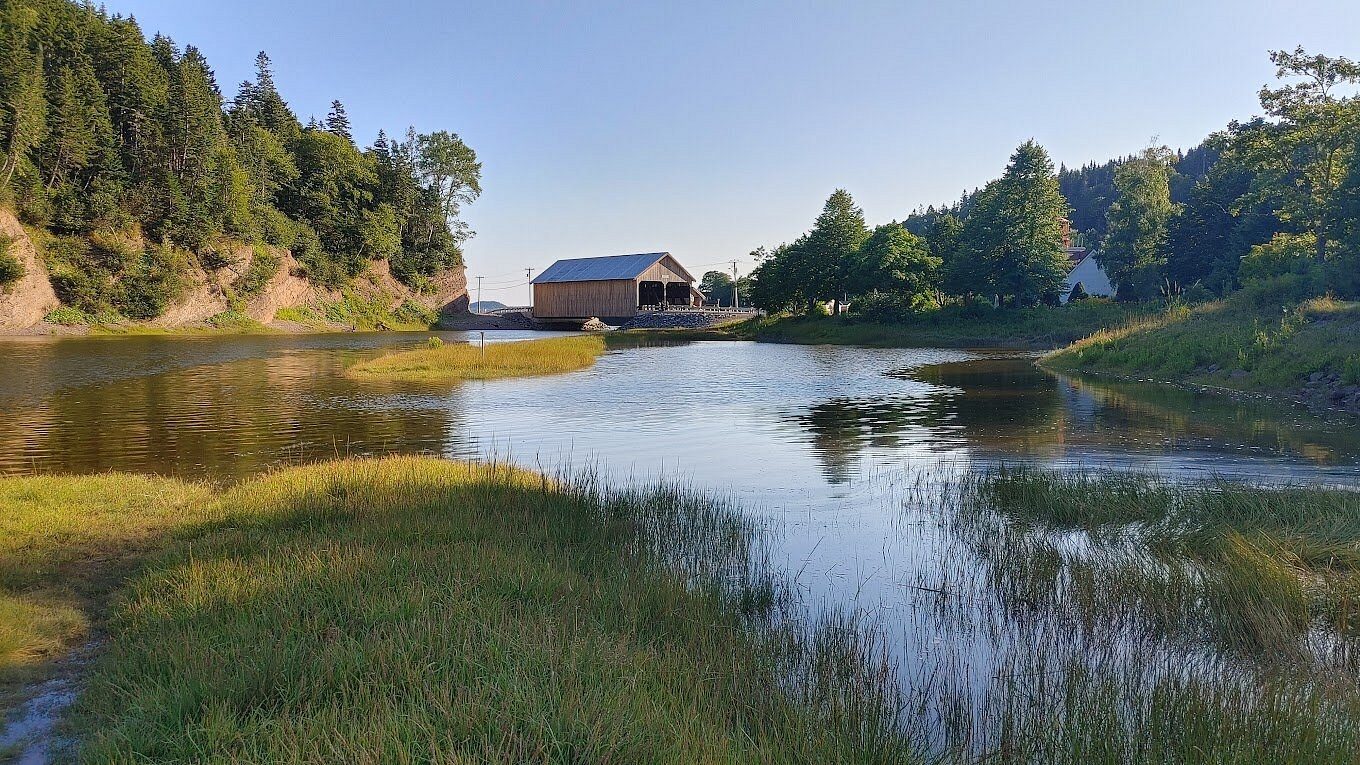
St. Martins is a good place to slow down, with a harbour setting and coastal scenery that changes with the tide. Arrange the main viewing or guided experience around current local conditions. The same shoreline can look very different a few hours later.
The sea caves are a popular subject for photographs, but they should not be treated as unrestricted walking destinations. Check current local guidance, tide timing, weather and authorized access before considering a shoreline outing. Remain within the recommended area and follow any closure instructions.
Covered bridges and village roads also deserve RV attention. Do not assume every picturesque bridge can carry the vehicle or offers enough clearance. Follow posted limits and the campground's recommended access rather than choosing a scenic shortcut from a photograph.
A smaller vehicle makes it easier to combine a community visit, a meal and a legal viewpoint. If using the motorhome, confirm the actual lot and a safe exit. Avoid blocking fishing activity, residences or access roads while stopping for a view.
St. Martins camping and the scenic-drive base
Fundy Woods is one private campground option to investigate for the St. Martins portion. Its location supports visits to the community and Fundy Trail Provincial Park. Confirm the precise RV site category, services, equipment length and arrival arrangements directly.
Compare any alternative using the same questions. Is water available at the pad or shared? Is sewer included or is a dump station used? What electrical amperage is supplied? Can the complete combination reach and leave the site without an awkward approach?
A two-night stay creates a full scenic-drive day without towing all the camping equipment through every stop. This is especially convenient when travelling with a trailer. If the RV is also the sightseeing vehicle, check park parking and any route advice for its dimensions.
Keep the first evening local. A short harbour visit or a campground meal is enough after moving from Saint John. Save the longer scenic drive for a morning when you can check current park notices and choose a realistic number of stops.
Fundy Trail Provincial Park: make it a separate outing
Fundy Trail Provincial Park includes a roughly 30 km scenic drive with coastal lookouts and walking options. It deserves more than being treated as a shortcut between campgrounds. Choose a few stops rather than trying to visit every viewpoint.
Check the opening hours, admission arrangements and current access information before leaving camp. Ask about the complete rig if using a large motorhome or towing combination. Grades, curves and individual parking areas make the vehicle plan important even when the park road is open.
As checked on October 9, 2026, the provincial park's website states that the Big Salmon River suspension bridge is closed for renovations this season. Recheck the notice before planning a walk that depends on it. An older trail description may still refer to the bridge.
The Fundy Footpath is a separate, demanding wilderness undertaking, not a casual extension of a short viewpoint walk. Select a suitable day trail from current park information and keep the return distance, daylight and group abilities in mind.
Connecting the provincial park to Alma
The broader coast route has road connections toward the Alma and Fundy National Park area, but do not assume the scenic parkway operates as an unrestricted twenty-four-hour public highway. Check the current gates, hours, route and any vehicle guidance before choosing a through drive.
A direct mainland road alternative can be useful if park hours, conditions or vehicle suitability make the scenic route inconvenient. Save that option before travel. A navigation app may propose a road without accounting for gates or your complete combination.
If you already spent a full day exploring from St. Martins, make the move to Alma a transfer with one proper break. There is no need to repeat every lookout while towing. Reach the next campground with daylight for setup.
Ask the Alma-area campground for its final directions. Arrival routes within a national park can differ by campground, and a covered bridge elsewhere in the park should not be assumed suitable for the RV. Current closure notices matter more than an old map.
Alma and Fundy National Park camping
Alma provides a community base beside the national park, with useful food and visitor services to check for your dates. Staying nearby gives you time for park walks and tidal scenery without commuting across the whole coast. Our directory lists campgrounds at Fundy National Park and campgrounds across New Brunswick.
Cannontown Campground is a concrete option for travellers seeking fully serviced camping. Parks Canada lists electricity, water and sewer at its sites. Confirm the individual equipment limit, pad and reservation rather than assuming every RV fits.
Fundy National Park has five frontcountry campgrounds in all: Headquarters, Chignecto, Point Wolfe, Cannontown and Lakeview. Parks Canada says they offer washrooms, showers and, at some sites, electrical, sewer and water hookups, but its overview does not say which campground has which services. Each offers different settings and service categories. Use the current camping information and site listings to compare. Do not apply Cannontown's hookup description to the whole park.
Point Wolfe access needs special checking. Parks Canada states that the covered bridge is closed from September 8 until December 2026 for repairs, affecting facilities reached via the bridge. It also has vehicle/equipment limits when operating. Recheck both access status and eligibility before considering that area.
A focused five-day one-way itinerary
Day 1: Saint John to St. Martins-area camp. Complete the main supplies, make a modest gateway visit if time allows and settle into the campground. Use the evening for a local outing with appropriate transport.
Day 2: Fundy Trail Provincial Park. Choose a manageable scenic-drive and walking plan using current access notices. Keep the principal walk modest enough to leave time for lookouts and breaks. Return to the same base.
Day 3: Transfer to Alma/Fundy National Park. Use the confirmed route and arrive with time to set up. A short community visit can fit after the RV is parked, but avoid adding a major hike to the transfer.
Day 4: National-park day. Select one main walk or activity matched to weather and abilities. Include tidal viewing from an authorized location and leave time for a relaxed meal.
Day 5: Hopewell Rocks and onward travel. Work backward from the official access window for the chosen date. If that timing creates a rushed day or conflicts with checkout, add a Hopewell Cape or Moncton-area night rather than forcing the schedule.
A seven-day visit with more tide flexibility
Use Days 1–3 as above, then keep Days 4 and 5 at the Alma base. One day can focus on a park walk and another on a gentler coast or community outing. This extra time lets weather move the outdoor activity.
On Day 6, visit Hopewell Rocks using the published tide and access information, with a suitable nearby overnight afterward. If viewing both low and high tide is a priority, build the day's activities around that goal and check the current ticket terms.
Day 7 becomes the onward or return stage. Travellers returning to their original New Brunswick starting point should map that drive explicitly. Those continuing toward PEI or Nova Scotia need separate campground and crossing arrangements.
A longer visit also suits families or mixed-mobility groups. A short trail, an accessible viewpoint and time at camp can make a complete day. You do not need a demanding hike each morning to enjoy the national park.
Hopewell Rocks: plan from the official access window
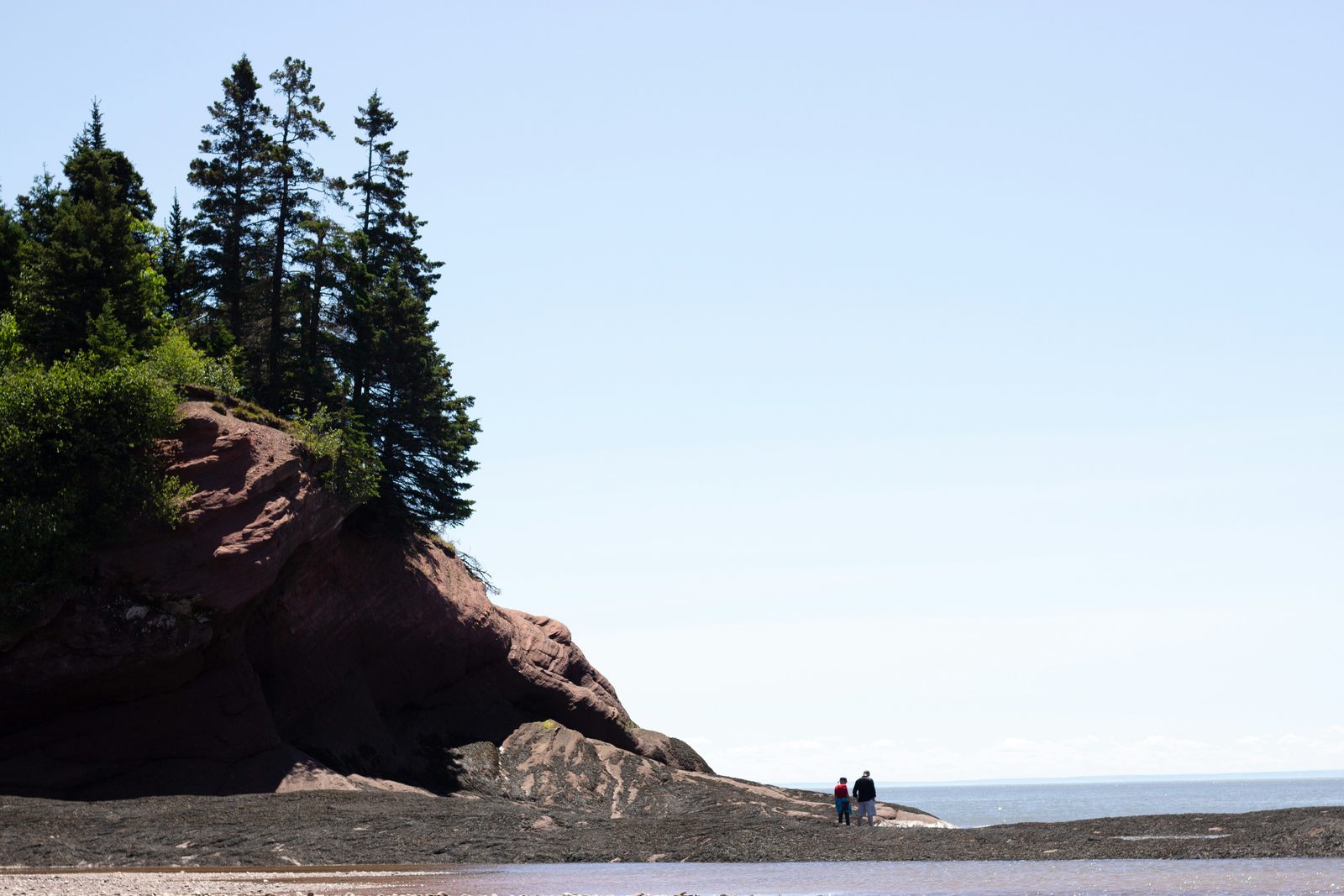
Hopewell Rocks is a provincial park, separate from Fundy National Park. Consult the official tide tables for the visit date, and check opening hours and current notices.
Low tide time alone is not permission to enter the ocean floor. Actual access is controlled by park staff and can vary. Follow the designated entry, return and closure instructions rather than calculating your own margin from a general tide app.
The attraction offers different ways to view the formations, with stairs, ramps and walking surfaces that may affect accessibility. Check the current visitor information for the group's needs. A ramp alternative does not make every ocean-floor area an easy or accessible walk.
If you want both high- and low-tide views, allow enough time and verify the current admission arrangements. Choose a nearby base or a slower onward stage. The experience is better when the tide schedule shapes the day instead of being an awkward stop between two long drives.
Park walks, coastal outings and guided activities
Fundy National Park has forest and coastal walking opportunities, but conditions and effort vary. Choose the route using the current description and notices. A waterfall walk and a longer coastal hike are different commitments, even if both appear in an attraction list.
Bring basic walking supplies and allow time for wet roots, slopes and pauses. Keep the return distance clear before starting. If the group includes children or visitors with mobility needs, select a shorter route with confirmed access rather than assuming a famous trail suits everyone.
For kayaking or another tidal activity, use an appropriate operator and follow its guidance on meeting time, clothing, equipment and conditions. The Bay of Fundy's tides are a reason for expert local planning, not a reason to improvise from an attractive photograph.
Make one guided outing the main event of the day. Do not combine it with a major campground move unless the timing genuinely works. Weather-related changes are easier to handle when a longer stay includes a flexible afternoon or spare activity day.
Tide timing, local clocks and safe viewpoints
Use the tide information for the specific location. A schedule for Hopewell Rocks should not automatically be applied to St. Martins or another bay access. Travel time between those places also needs allowance when planning two visits.
The provincial park tide tables identify their times as Atlantic Time. Check how your phone or downloaded app displays the information, especially after travel from another time zone. Keep the date and location visible alongside any saved times.
Stay within authorized coastal areas and follow staff directions. Avoid entering caves, crossing mudflats or approaching cliff edges simply because other visitors appear to be doing so. An exposed beach at one moment can become a different environment as water rises.
A land-based viewpoint is often the simplest option for a mixed group. Choose a safe legal place to watch the changing shoreline, with parking and the walking approach confirmed. Not every memorable tide experience requires reaching the ocean floor.
Food, fuel, water and dump stations
Use Saint John and the Moncton area for larger supply tasks, with Alma and St. Martins businesses checked for smaller needs. Seasonal hours matter, especially late in the camping season. Carry a simple arrival-night meal and packed-lunch ingredients. Browse campgrounds with dump stations to compare your options. Our RV fuel planner can help you budget fuel for the longer stages.
Fuel before the scenic stage when access and space are straightforward. Long combinations need a suitable forecourt and clear exit. Do not assume a coastal viewpoint or park entrance includes fuel, propane or RV tank services.
Use the sequence of campground amenities to plan freshwater and holding tanks. A fully serviced stay can be convenient, while an electrical-only site needs shared water and waste arrangements. Verify these separately for each reservation.
Complete authorized dump and fill tasks before a long onward journey. Ask about non-guest access if using another campground's facility, and keep drinking-water gear separate from waste equipment. A rest area is not automatically a dump-station option.
Seasons, weather and vehicle considerations
June through September is a useful broad season for a first coast trip, with individual campground and attraction dates checked separately. Shoulder-season travel can be quieter but may bring reduced services. An autumn photograph does not establish that all businesses are open. Our list of big-rig-friendly campgrounds is a good place to start if you tow a long trailer or drive a large motorhome. More best RV trips in New Brunswick are listed on our trips page.
Fog, rain and wind can change the scenic experience and driving conditions. Keep a weather alternative for the main walk or guided activity. If visibility is poor, use a more direct transfer and leave the lookout tour for another day.
Record the RV's full height and length, including carried equipment and towing. Check campground entrances and posted bridge restrictions. Covered bridges are attractive features, but their suitability must be established before driving toward them.
Pack layers, rain gear and footwear suitable for the chosen surfaces. Manage damp clothing inside the camper and keep meals workable indoors. Coastal weather is easier to enjoy when the camp setup does not depend on a perfectly dry evening.
Budget and onward connections
Separate campground costs, park admission, guided activities and transport. Fundy Trail, Hopewell Rocks and the national park have different arrangements. Check what the chosen tickets include rather than assuming one pass covers the entire coast. If you are continuing into Nova Scotia, Halifax to Cape Breton by RV covers the road to Baddeck and the Cabot Trail, and Nova Scotia Lighthouse Route by RV covers the South Shore.
A ferry connection to Nova Scotia can be part of a wider trip, but it changes the route and needs its own vehicle quote, check-in and booking. The described itinerary uses New Brunswick roads and does not rely on a sailing.
For onward travel toward PEI, see PEI Coastal Loop by RV, then confirm the bridge or ferry plan and add the approach mileage. For a return to Saint John, protect a travel stage instead of attaching the whole drive to an already full Hopewell day.
Before leaving the final campground, check current roads, tank requirements and driver energy. Keep the route, confirmations and essential contacts offline. The best final stage is one that completes the trip comfortably, even if an optional last stop is skipped.
More route guides: Cabot Trail by RV, Montreal to Gaspé by RV and Trans-Canada RV route: east half.
Frequently asked questions
Are Fundy Trail and Fundy National Park the same place?
No. Fundy Trail Provincial Park is the scenic provincial park near St. Martins, while Fundy National Park is near Alma. Hopewell Rocks is another provincial park. Their access, fees, notices and bookings need checking separately.
How long should the coast visit take?
Five days gives a focused one-way itinerary. Seven days allows more national-park time and flexibility for tides and weather. Add the journey to Saint John and the return or onward transfer beyond Moncton.
Can we walk at Hopewell Rocks whenever the tide is low?
Follow the park's published access information and staff directions. Low tide alone does not establish permission or the actual ocean-floor access window. Weather and local conditions can affect access.
Is Point Wolfe a simple RV alternative?
Check current access and equipment limits first. The covered bridge has a published September–December 2026 repair closure affecting facilities beyond it. Recheck the notice for the travel date rather than relying on an older campground description.
Does Cannontown offer full hookups?
Parks Canada lists electricity, water and sewer at Cannontown sites. Confirm the selected pad's equipment limit and layout before booking. Other Fundy campgrounds have different service categories.
Do we need a ferry?
No ferry is required for this Saint John–Moncton coast itinerary. A Nova Scotia or PEI crossing is an optional separate part of a wider Atlantic trip.
Can a large motorhome use every scenic stop?
Do not assume so. Confirm park guidance, the actual lot and a safe exit for the full vehicle. A smaller sightseeing vehicle and a few well-chosen stops can simplify the coastal days.
Official sources
Rules, fees, and services change. Check these directly before you travel.
- Fundy Trail Provincial Park: scenic-drive access and current bridge notices.
- Fundy Woods: St. Martins-area campground enquiries.
- Fundy National Park: activities, admission and closure notices.
- Fundy camping: campground categories and bookings.
- Cannontown: serviced RV camping.
- Hopewell Rocks Provincial Park: visitor access and admission.
- Hopewell tide tables: date-specific access planning.
- New Brunswick 511: current road conditions.